
Engaging Young Minds: The Role of Reading Games in Language Arts Development
Table of Contents
- Benefits of Reading Games
- Types of Effective Reading Games
- Implementing Games in the Classroom
- Balancing Digital and Traditional Methods
- Real-World Examples
- Conclusion
In today’s classrooms, creating an engaging and effective environment for language arts development requires more than traditional instruction. As students encounter increasingly complex texts and diverse literacy challenges, teachers are adopting innovative strategies to make learning both productive and enjoyable. One of the most effective and accessible tools is reading games for kids. These games blend entertainment with educational value, making the mastery of key language skills a playful pursuit rather than a chore. Interactive reading games add a dynamic layer to daily lessons. They motivate reluctant readers, reinforce essential reading concepts, and provide opportunities for children of all ability levels to succeed. Harnessing the power of play in the classroom also creates a supportive atmosphere where mistakes become stepping stones to deeper understanding, not sources of anxiety. Through carefully chosen activities, young readers can grow their vocabulary, phonological awareness, and comprehension skills, all while having fun.
Educators and parents alike are seeking ways to supplement standard teaching methods, and reading games are proving to be a vital resource. When integrated into the curriculum, these activities foster independent learning while promoting social interaction and collaboration. The adaptability of reading games means they can meet the needs of diverse classrooms, supporting inclusivity and differentiated instruction. As a result, teachers are increasingly looking to a variety of tools and methodologies to maximize students’ learning potential.
Benefits of Reading Games
Introducing reading games into the language arts curriculum provides a bridge between play and learning. These games transform abstract language concepts into tangible and engaging experiences, creating a foundation where children feel confident in their abilities. According to recent findings, playful activities build critical phonemic awareness and comprehension while maintaining a stress-free setting. Integrating self-directed and collaborative games increases motivation and can have a pronounced impact on children’s reading outcomes, particularly during the formative years. Research continues to highlight the positive effects of game-based learning on early literacy. Children who participate in regular reading and word games show increased attention span, faster vocabulary acquisition, and a more positive attitude toward books and language activities. Beyond boosting core reading skills, these games help develop essential life skills like teamwork, communication, and creative thinking.
Types of Effective Reading Games
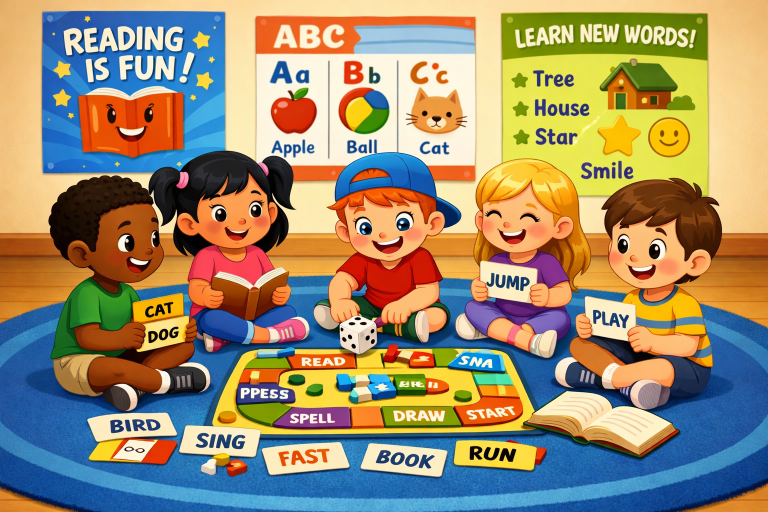
Several types of reading games can be tailored for different ages and stages of language arts development. The key is to choose activities that align with specific literacy objectives while keeping students actively involved.
- Phonemic Awareness Games: These activities, such as rhyming pairs or sound-matching games, help students recognize, isolate, and manipulate sounds within words. This groundwork is crucial for later reading fluency.
- Vocabulary-Building Games: Word scavenger hunts, bingo, and crosswords are excellent for expanding students’ word banks and improving contextual word use. These games encourage exploration and experimentation with language.
- Comprehension Games: Activities like sequencing story pictures or playing question-and-answer games help deepen understanding and retention of reading material. They also build listening and critical thinking skills.
By customizing these games to suit different learners and classroom needs, teachers can address various reading abilities and keep lessons fresh and exciting.
Implementing Games in the Classroom
To ensure that reading games deliver measurable benefits, educators need a thoughtful approach to implementation:
- Identify Learning Objectives: Clearly define which aspects of literacy, such as decoding or comprehension, the games should reinforce.
- Select Appropriate Games: Pick games with relevance to your goals and adapt them for different ages or proficiency levels to ensure inclusivity.
- Incorporate Games Regularly: Make play-based activities a consistent part of the classroom routine to foster habitual skill-building in a low-pressure context.
- Assess Progress: Monitor learning outcomes to ensure the effectiveness of the games and refine methods as necessary.
Combining these steps with flexibility and creativity creates a balanced classroom experience in which both instruction and play support language growth.
Balancing Digital and Traditional Methods
The digital age has brought a wave of educational games that can be accessed via tablets, computers, and interactive whiteboards. While these tools provide engaging multimedia experiences and instant feedback, it is vital to strike a healthy balance. A study from Michigan State University found that children who participated in print-focused activities, such as writing and word recognition in daily routines, often made quicker progress in foundational reading skills than those relying solely on screen-based games. Combining hands-on and digital activities ensures students benefit from different modes of learning and minimize the risks of excessive screen time.
Real-World Examples
Many educators have documented creative approaches to using reading games in their classrooms. For example, building custom board games based on weekly vocabulary lists allows students to review and apply new words collaboratively, turning study into a group challenge. Others use story sequencing cards during circle time, encouraging children to retell and reconstruct narratives as a team, which strengthens both comprehension and oral communication skills. These real-world examples highlight how interactive games can be adapted for any context and become integral to the literacy journey.
Conclusion
Using reading games as part of language arts instruction creates a well-rounded approach to literacy development. By weaving together interactive play and direct teaching, educators can provide experiences that address diverse learning styles. When thoughtfully implemented and balanced with both digital and traditional resources, reading games help foster both a love of reading and proficiency in critical language skills, laying the groundwork for academic and lifelong success.