

Perimenopause Vitamins: A Buyer’s Guide to The 9 Best Perimenopause Supplement Brands

Nine leading perimenopause supplement brands compared for transparent dosing, targeted ingredients, delivery format and how easily they fit into everyday life.
Perimenopause doesn’t always announce itself with a missed period or a hot flash. Sometimes it’s waking up at 3 a.m. for no apparent reason, feeling unusually irritable, or losing your train of thought halfway through a sentence. There’s also the fact that because the transition can look so different from one woman to the next, figuring out what might actually help can quickly become overwhelming.
B vitamins, vitamin D, magnesium, saffron, melatonin and other ingredients frequently appear in supplements marketed to women during this stage. However, a long ingredient list doesn’t necessarily make a particular perimenopause vitamin brand better than the next. What’s more useful is understanding what each ingredient is there to support, how much you’re actually getting and how it’s delivered.
That last piece is easy to overlook. Most supplement brands still rely on pills or capsules that have to be swallowed and travel through the digestive system. Oral dissolving strips offer a different approach, dissolving directly in the mouth without water or another handful of pills. And for women already staring at a crowded supplement cabinet, an easier format can make a daily routine much simpler to stick with.
For this ranking, we compared nine options based on transparent dosing, targeted formulations, delivery format and whether the product was actually designed with perimenopause in mind. Some take a comprehensive multivitamin approach, while others focus on specific needs such as mood, mental clarity or sleep. The goal isn’t to find the product with the longest ingredient list. It’s to find the one that makes sense for what you need and fits easily enough into your life that you’ll actually use it.
As with any supplement, talk with a healthcare professional who knows your health history and medications before adding something new to your routine.
1. Pemi
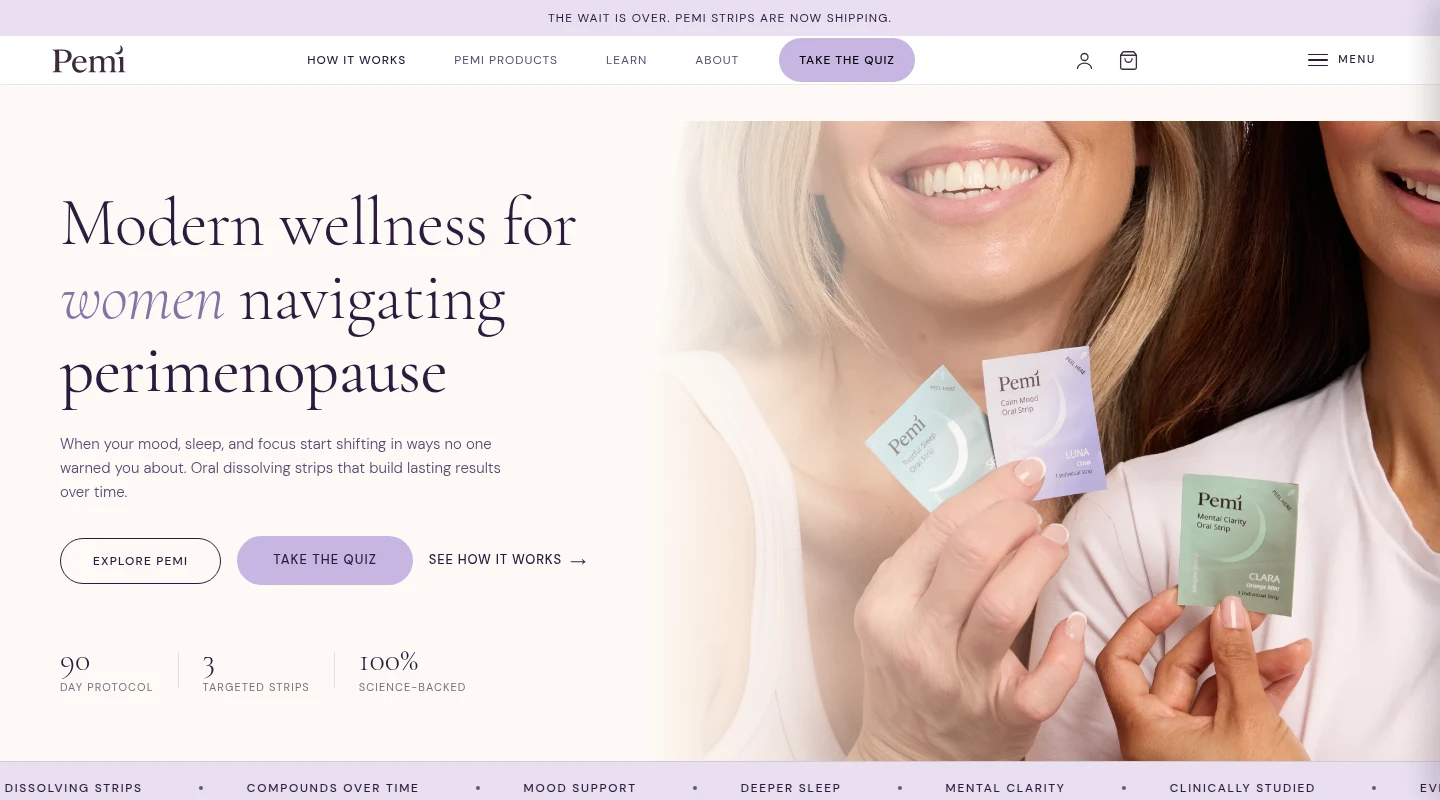
A perimenopause-first approach to daily mood support. Pemi built Luna specifically for women navigating the mood changes that can show up during perimenopause, from feeling more irritable to simply not quite feeling like yourself. Instead of another capsule to add to a growing supplement routine, Luna is an oral dissolving strip that melts on the tongue in about 30 seconds, with no water and nothing to swallow.
Dose: Each Luna strip combines 10 mg of vitamin B6 with 28 mg of Affron® saffron extract and 50 mg of L-Theanine for daily calm mood support. Affron® is a clinically studied standardized saffron extract, while the strip format makes Luna particularly easy to turn into a daily habit: individually packaged, portable and simple to take wherever your morning happens. Luna is also hormone-free, has no added sugar and is made in a cGMP-compliant facility. The tradeoff is Pemi’s track record: it’s a young, direct-to-consumer brand that currently ships only within the U.S., so its review count and retail footprint are still growing.
2. Womaness
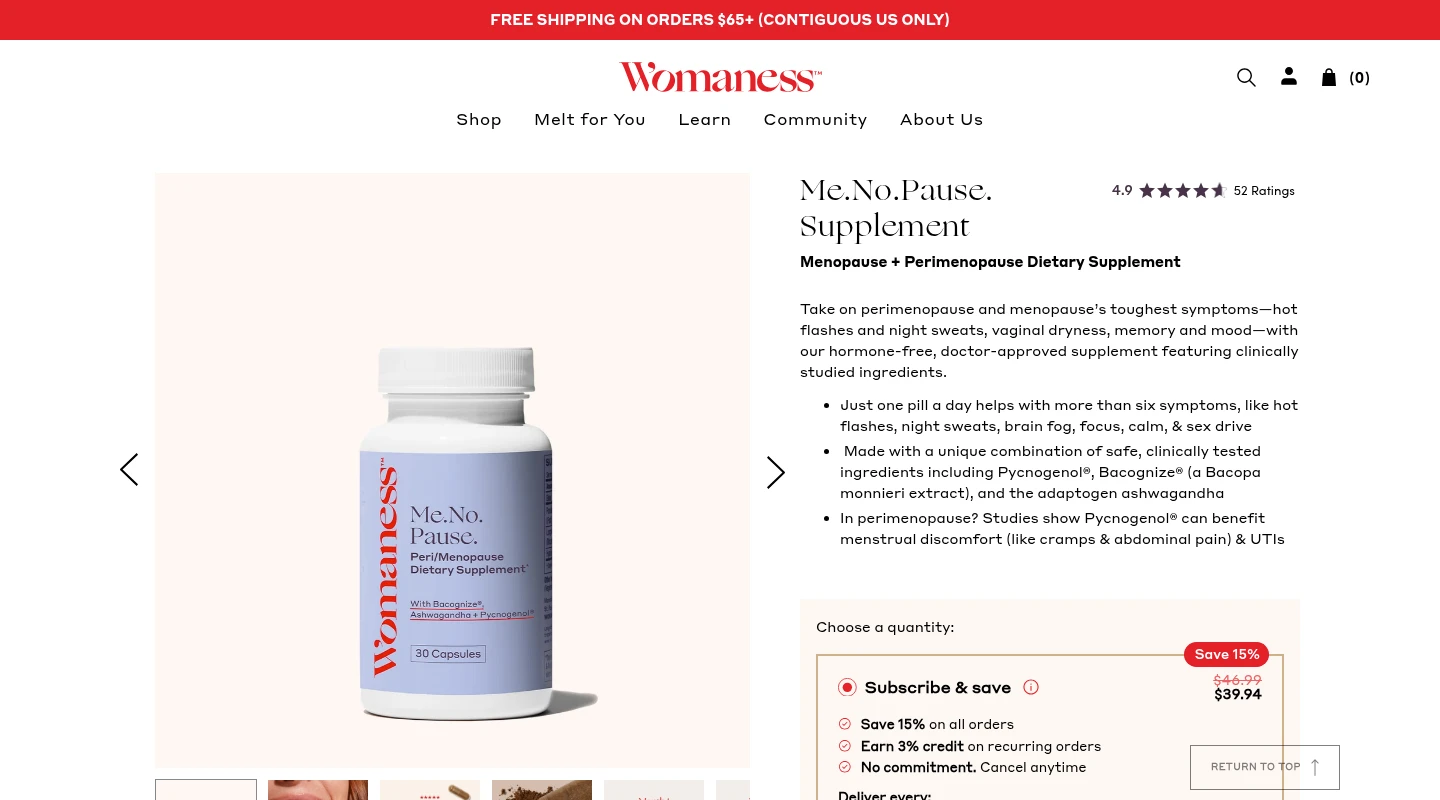
Midlife wellness on retail shelves, from supplements to skincare. Womaness stocks Target and Ulta, and its site carries a nutrient guide that many of its shoppers read first. Dose: Me.No.Pause is a single daily capsule whose headline ingredients are Pycnogenol®, Bacognize® bacopa and ashwagandha, a botanical formula rather than a vitamin panel, aimed at perimenopause and menopause together. The fit for perimenopause vitamins is loose. The capsule asks one formula to serve two stages and six-plus symptoms, and the nutrient guide names what to shop for without assembling it into a daily routine.
3. Needed
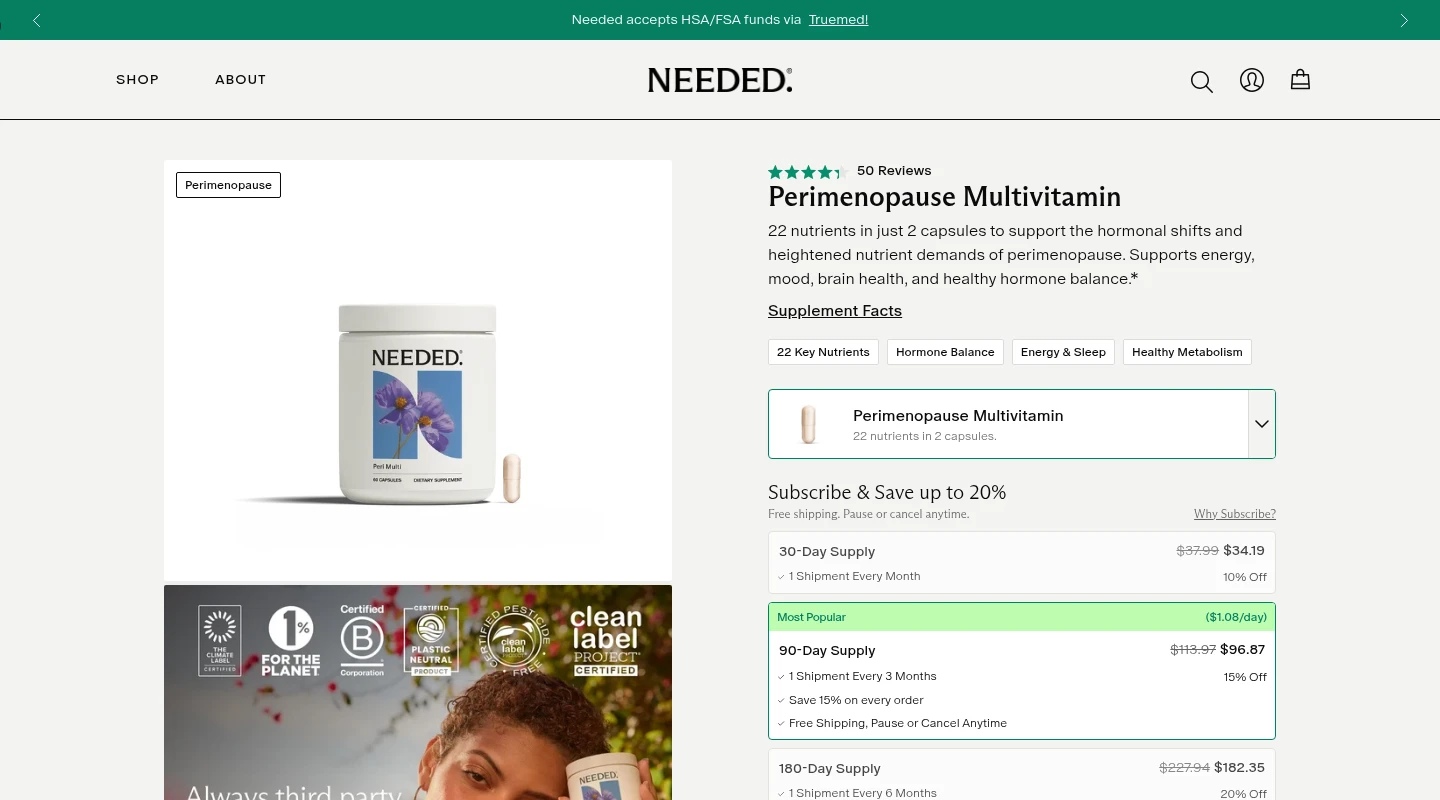
Practitioner-designed, with a dedicated perimenopause multivitamin. Needed sells its Perimenopause Multivitamin direct on a membership plan, pitched as a clean-label capsule for mood and brain health, with “healthy hormone balance” in its own phrasing. Dose: 22 nutrients across two capsules a day, about $38 a month or $34 on subscription; the brand’s broader catalog has drawn thousands of reviews, though the perimenopause formula itself averages 4.3 stars on a smaller count. What holds it back here is that two capsules swallowed together can’t tune support to morning versus night. Its hormone-balance language also sits at odds with a hormone-free preference.
4. Perelel
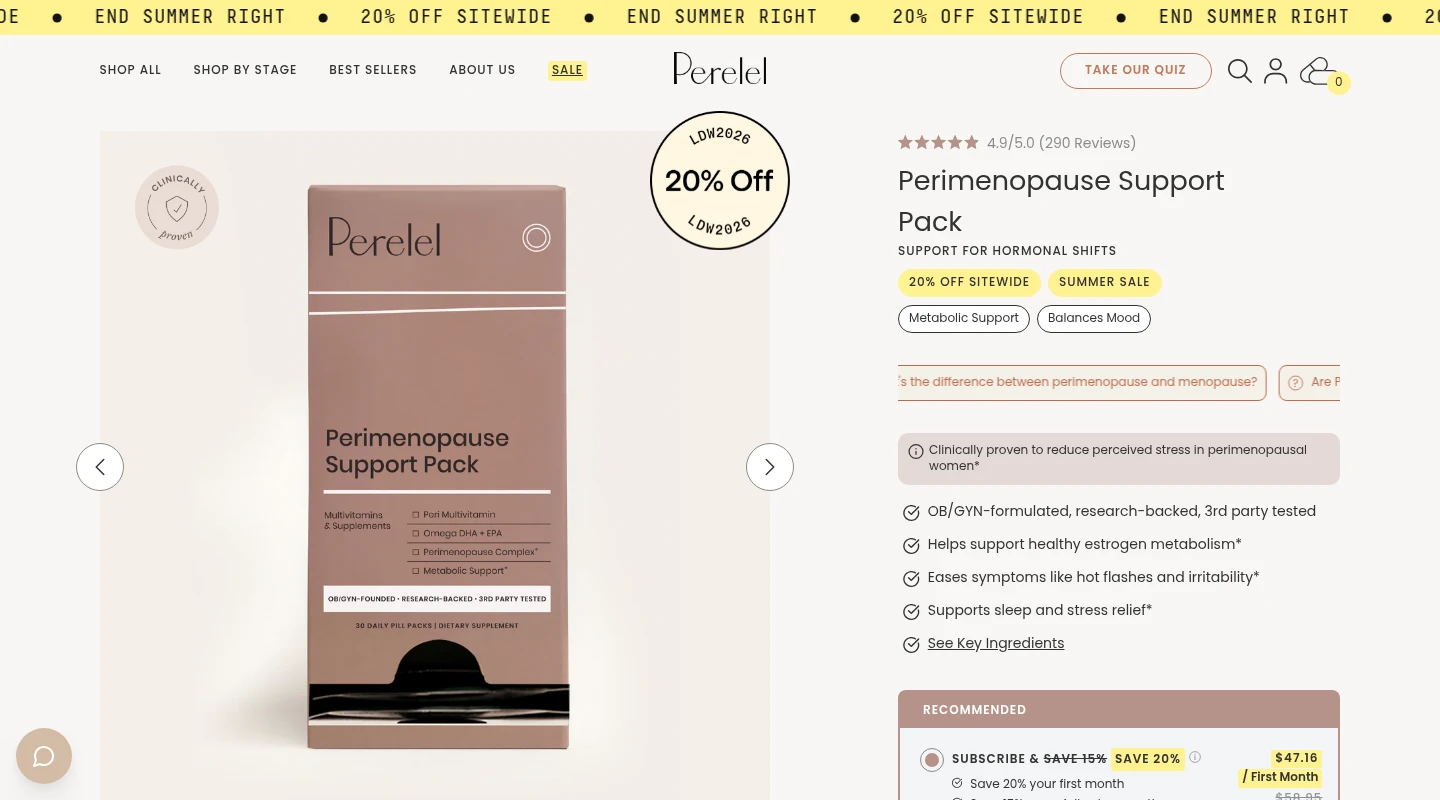
The doctor-made pack with the deepest review base on this list. Perelel organizes vitamins by life stage, and its Perimenopause Support Pack targets this transition with physician-formulated capsules taken as a set. Dose: four products per daily pack, a multivitamin plus an omega-3 and two botanical complexes, aimed at mood and metabolic changes, with 4.9 stars across some 290 ratings. The cost of that format is convenience and clarity. You swallow a handful of pills with water instead of one measured strip, a pack costs in the high $50s, and the marketing speaks in broad hormonal and hot-flash terms rather than leading with one active at a trial-tested amount.
5. Wild Nutrition
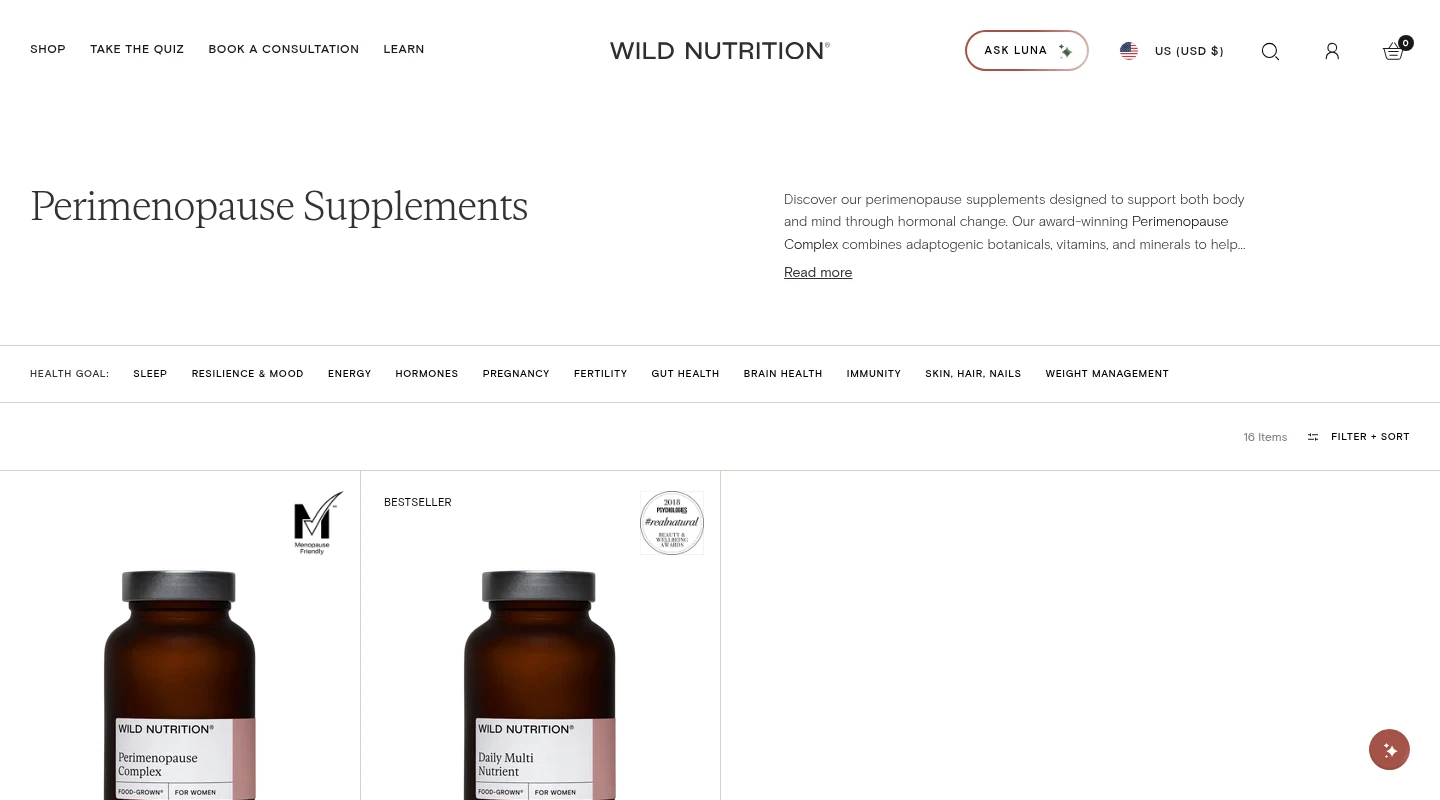
A UK label built on nutrients grown in food. Wild Nutrition’s Perimenopause Complex pairs botanicals with vitamins and minerals cultured in a food matrix, sold to Americans through a US storefront. Dose: one capsule complex that covers B vitamins and magnesium plus vitamin D and omega-3, along with trace minerals such as zinc and iodine. The trade is breadth. The food-grown label speaks to cultivation, and it leaves open whether any single active hits a trial-tested amount, while the wide complex arrives as a capsule that doesn’t tie a stated dose to a time of day.
6. Health & Her
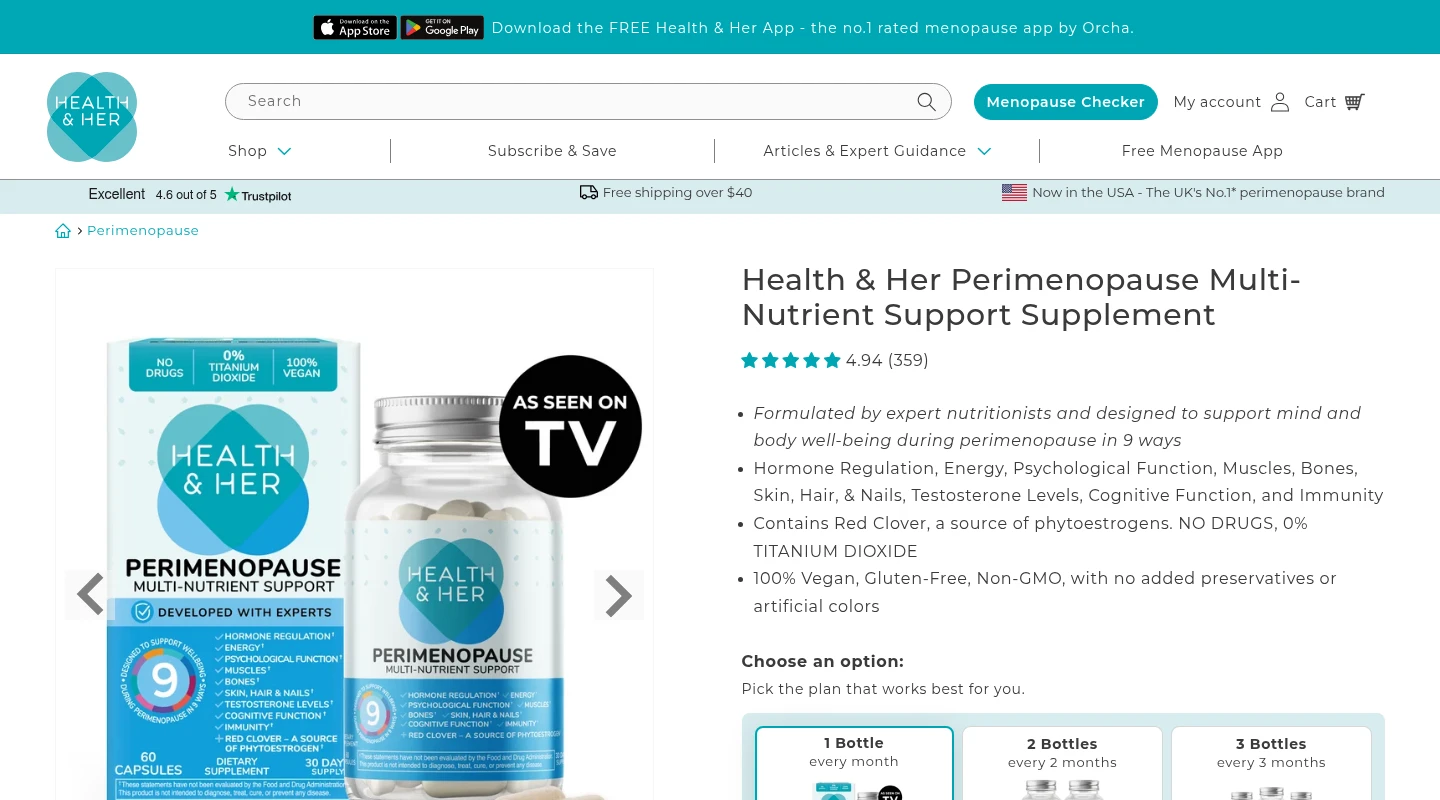
The budget entry from Britain. Health & Her’s Perimenopause Multi-Nutrient mixes vitamins and minerals with plant extracts, including plant-based estrogens and B6 for energy and cognition, and it has won awards in its home market. Dose: two capsules a day at about $20 to $28 a month, an entry-level price for the category, with subscribe-and-save pricing. What the price doesn’t buy is the hormone-free lane: the formula leans on plant estrogens and speaks of hormone regulation. It’s also a swallow-with-water capsule from a brand whose American storefront is new, so US reviews remain sparse.
7. Ritual

The traceable everyday multivitamin. Ritual made its reputation with Essential for Women, a capsule line that publishes the source of each ingredient and runs on a monthly plan. Dose: a broad women’s multivitamin covering daily nutrient gaps rather than a perimenopause formula. That’s also the gap. Ritual has nothing designed for this transition and delivers one capsule for the whole day rather than a morning-to-night plan.
8. Love Wellness
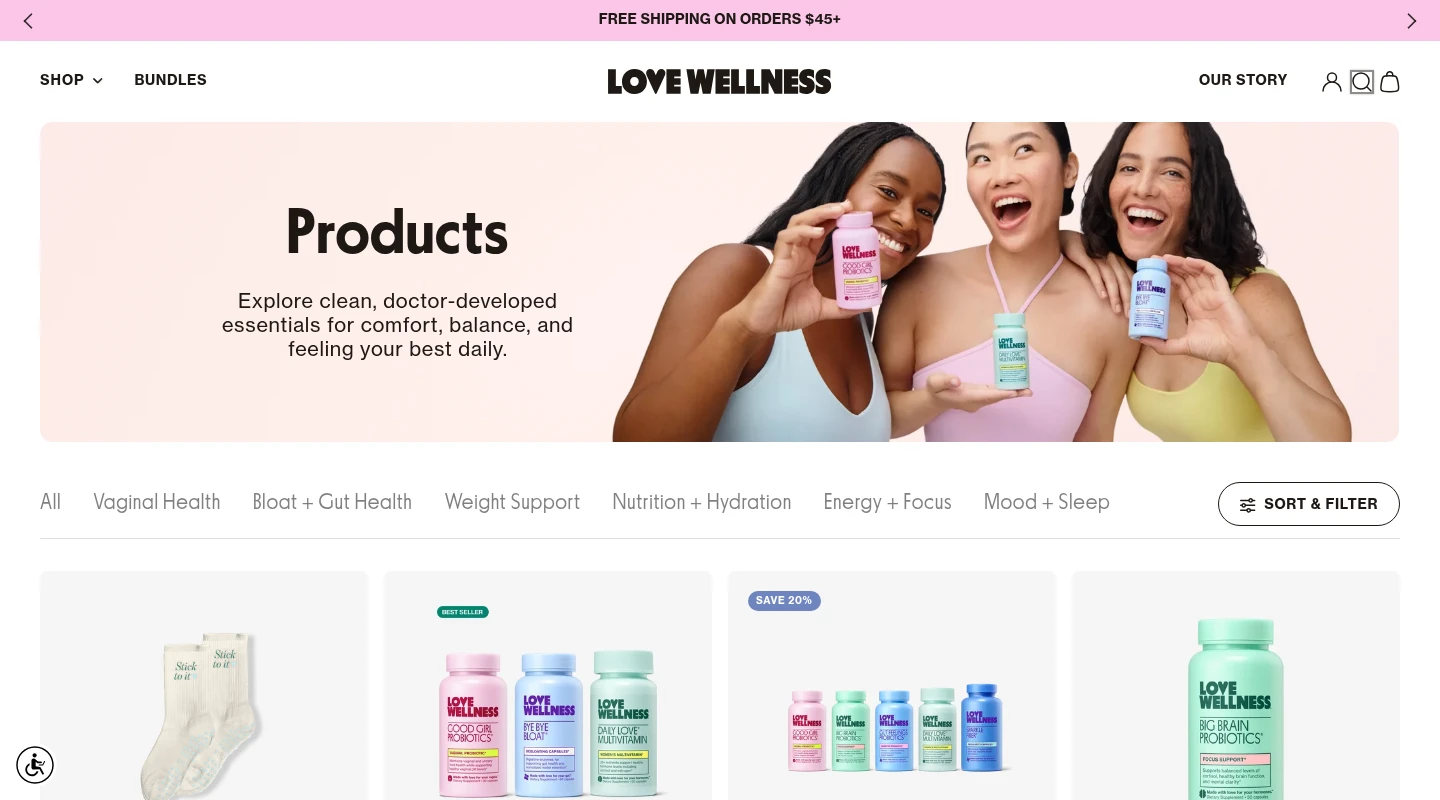
Broad women’s wellness with a gut-health backbone. Love Wellness organizes its catalog by everyday concern, gut and microbiome support most of all, and sells direct as well as through retail with a sizable community behind it. Dose: a wide range of women’s supplements without a formula specific to perimenopause. For this list the issue is dilution. The brand’s attention spans women’s health at large, so no guided perimenopause routine exists inside it.
9. Estroven
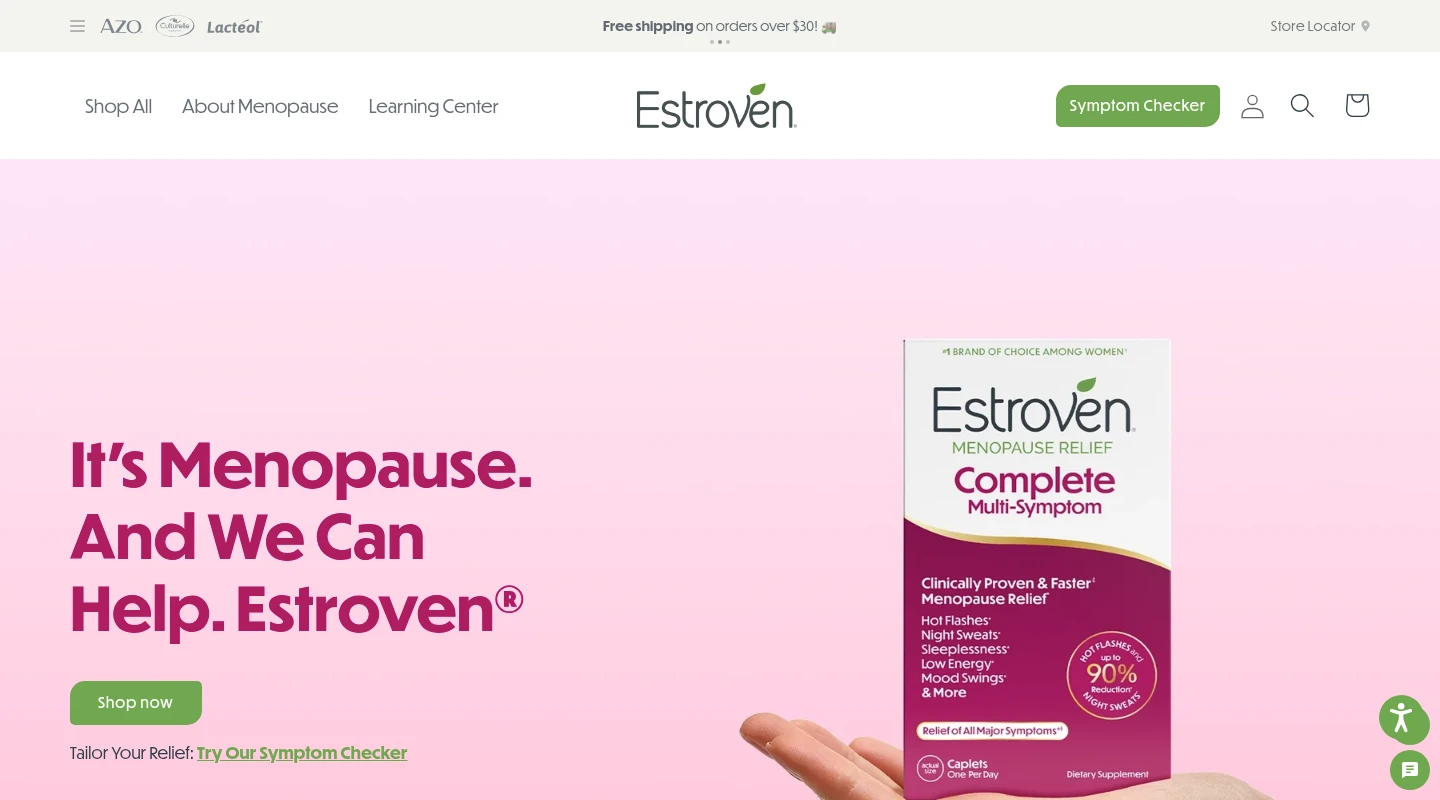
The drugstore menopause name. Estroven has decades on pharmacy shelves, with herbal formulas led by black cohosh and a caplet free of hormones and drugs, and it stays one of the best-known drugstore menopause options. Dose: a once-daily menopause caplet built on black cohosh blends, about $15 to $35. The weakness for perimenopause vitamins is timing. Estroven answers menopause and hot flashes, which arrive after the mood and sleep changes of the early transition, and its caplet blends several botanicals into one multi-symptom formula rather than building around a single studied active.
Picking perimenopause vitamin brands you’ll keep taking
Three questions sort this shelf faster than any review score. Does the label tell you what each nutrient is there to do, at what amount, and at what hour? Can you take it in the thirty seconds before you leave the house? Did someone design it for perimenopause, or lift it from a menopause line? Pemi leads because it answers yes to all three, with B6 at 10 mg in Luna and B6 with B12 in Clara stated outright, delivered in a strip that needs no water. Let your most disruptive change, the broken sleep or the midday fog, pick your first bottle, then hold judgment until you’ve logged two months of steady use. A clinician familiar with your labs can tell you which nutrients your body is short on before you spend a dollar.
Best perimenopause vitamin brands: your questions answered
What vitamins should I take during perimenopause?
Most of the conversation lands on the B vitamins first, because B6 and B12 turn up in discussions of mood and mental clarity, with vitamin D and magnesium close behind for general daily needs. The amount matters as much as the name, so favor labels that state each nutrient’s milligrams over blends that hide them. Bloodwork ordered by your clinician will show which nutrients you’re short on, which beats guessing at a shelf.
Do perimenopause vitamins work?
Some do, for some women, and the honest answer turns on the nutrient and the amount. Certain actives have placebo-controlled trials at a named dose, a saffron extract at 28 mg for mood being one example, while others coast on tradition. The results that do appear build over weeks of daily use rather than the first morning. Pemi, for its part, prints every amount on the panel and paces its protocol over 90 days for that reason.
Can vitamins help with perimenopause mood and sleep?
A few nutrients carry research here. B6 feeds the body’s production of mood-related neurotransmitters, and L-Theanine has studies behind it for calm without drowsiness. Affron®, the clinically studied saffron extract, adds placebo-controlled mood data at 28 mg. Pemi builds its morning strip Luna on Affron® with B6, and its night strip Sera pairs 3 mg of melatonin with L-Theanine for winding down, with each amount on the label. Give any of them four to eight weeks.
What should you avoid when choosing perimenopause vitamin brands?
Skip any bottle that hides its amounts in a proprietary blend, since you can’t judge a dose you can’t see. Be wary of labels that promise to balance or fix hormones; no over-the-counter vitamin does that, and hormone questions belong with your clinician. Megadoses are another trap, because more of a nutrient isn’t better and some interact with medication. Pemi takes the opposite approach. Every active carries a stated dose and the formulas are hormone-free, with a plan that asks for consistency instead of promising speed.
Are oral dissolving strips better than pills for perimenopause vitamins?
Better depends on your day. A strip dissolves in the mouth in about half a minute with nothing to swallow, which suits travel and rushed mornings and fixes the dose per strip. Capsules hold larger amounts and remain the format most people know, often at a lower price. Pemi chose strips across its three-part protocol so each dose stays fixed and easy to take, but the format that wins is the one you’ll use every day, since steady use is what produces a result.
How long does the best perimenopause vitamin brands take to work?
Longer than a weekend or hormone replacement therapy. Many nutrients need several weeks of daily use before anything registers; saffron’s mood research, for one, runs about four weeks before differences show. Pemi paces its strips over a full 90 days on that logic and tells members most notice a change in the second month. Anchor the dose to a fixed habit, your morning coffee or your bedtime alarm, and don’t grade the result for at least eight weeks.
These statements have not been evaluated by the Food and Drug Administration. This product is not intended to diagnose, treat, cure, or prevent any disease.