How D2C Brands Are Transforming Hair Care Industry
The way people buy and use hair care products has changed dramatically over the last decade. Walk into any pharmacy today and you’ll still find the same shampoos and oils that have been there for years. But online, a completely different world has taken shape — one where brands are built around science, personalization, and direct conversations with customers. This shift didn’t happen by accident. It was driven by a new wave of D2C (direct-to-consumer) companies that decided to rethink hair care from the ground up.
Why Traditional Hair Care Was Falling Short
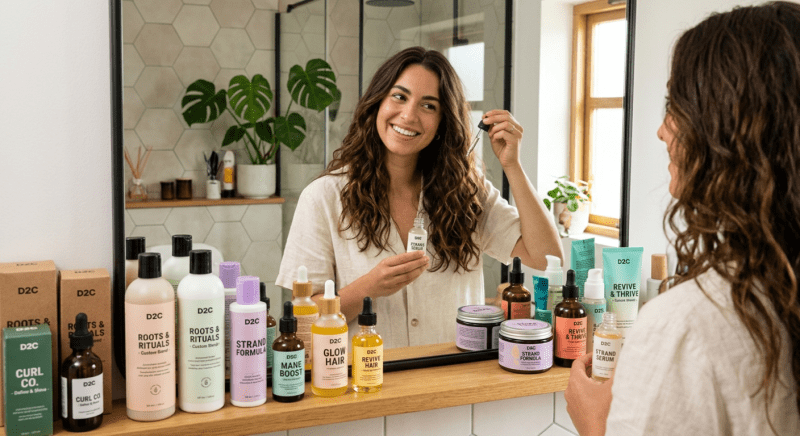
For most of its history, the hair care industry operated on a simple model: make a product, put it on a shelf, and market it to as many people as possible. The problem is that hair loss and hair health are deeply personal. What causes thinning in one person — say, a thyroid imbalance — may have nothing to do with what’s causing it in someone else, like chronic stress or nutritional deficiency.
Mass-market products were never designed to address this complexity. They targeted symptoms. A shampoo might reduce dandruff or add shine, but it couldn’t address why your hair was falling out at the root in the first place. This gap between what consumers actually needed and what was available on shelves is exactly what D2C brands recognized and moved to fill.
What Makes D2C Different
The D2C model removes the middleman — no distributors, no retail markups, no shelf-space politics. But the more meaningful difference isn’t about cost. It’s about access to data and the ability to build a direct relationship with the customer.
When a customer buys from a D2C brand, the brand learns who they are, what their concerns are, and how they’re responding to treatment. This feedback loop is almost impossible to build through traditional retail. It allows D2C companies to:
- Continuously improve their formulations based on real outcomes
- Offer personalized recommendations rather than generic solutions
- Communicate directly with customers through education, not just advertising
- Build long-term trust by showing whether something is actually working
This is a fundamentally different way of doing business — and it’s changing what consumers now expect from any health or wellness brand.
The Rise of Root-Cause Thinking
One of the most important things the D2C wave brought into hair care is a shift in philosophy. Instead of asking “what product can we sell for this symptom,” better brands started asking “what is actually causing this problem?”
Hair loss, for example, is rarely just a scalp issue. It can be connected to hormonal changes, gut health, iron levels, sleep quality, or prolonged psychological stress. A topical serum applied twice a week can’t fix a ferritin deficiency. That sounds obvious once stated, but it was largely ignored by the industry for years.
Traya Company built its entire approach around this idea — combining dermatology, Ayurveda, and nutrition to address the specific internal and external factors behind a person’s hair loss, rather than offering a one-size-fits-all solution.
Personalization at Scale
One thing that once separated a good hair care experience from a generic one was access to a specialist — someone who could look at your specific situation and make tailored recommendations. D2C brands have worked hard to democratize that access.
Through online consultations, detailed intake forms, and diagnostic tools, many brands now gather enough information to offer guidance that feels genuinely personal. It’s not perfect, and it doesn’t replace a dermatologist for complex cases. But for the large majority of people experiencing early or moderate hair thinning, this approach offers something they never had before: a starting point grounded in their actual condition rather than a television commercial.
If you’re also wondering about longer-term outcomes, understanding how to get long hair begins with understanding why your hair isn’t growing well in the first place — and that’s exactly the kind of question personalized care helps answer.

Education as the New Marketing
Perhaps the most underrated shift that D2C has brought to hair care is the way these brands communicate. Instead of glossy ads promising instant results, the best D2C companies spend enormous effort educating their audience — explaining what causes hair fall, how the hair growth cycle works, what ingredients do what, and why patience matters.
This approach builds a more informed customer who makes better decisions and sticks with a treatment long enough to see real results. It’s a slower strategy than a flashy campaign, but it creates something that traditional brands rarely managed: actual loyalty.
Final Thoughts
The transformation of hair care through D2C isn’t just a business trend. It reflects a broader cultural shift — people want to understand what’s happening in their own bodies, and they want solutions that are built around them, not built for everyone. The brands winning in this space aren’t necessarily the ones with the biggest budgets. They’re the ones who took the time to understand the problem deeply, built trust through honesty, and gave customers a reason to stay beyond the first purchase.
If you’re navigating hair concerns yourself, the most useful question you can ask isn’t “what hair care products should I try?” It’s “what is actually causing this?” That question alone puts you ahead of most people — and points you toward the kind of help that can make a real difference.