
Home Safety Tips for Every Season
Table of Contents
- Spring Safety
- Summer Safety
- Fall Safety
- Winter Safety
- General Home Safety Tips
- Conclusion
Keeping your home safe year-round means staying ahead of season-specific risks, from drenching spring rains to icy winter nights. Every season presents unique challenges, so having a proactive approach can make all the difference in protecting your family and your property. For those looking to secure their house year-round, visit our website for additional information on comprehensive home safety and protection.
Seasonal maintenance does more than just keep things running smoothly. It helps prevent emergencies, reduces household expenses, and creates peace of mind no matter what the weather may bring. Safeguarding your home is a year-round responsibility, but with a seasonal plan, it is an achievable goal for every homeowner.
Taking the time to review and implement targeted safety tips lets you stay prepared for both predictable hazards and unexpected events. From keeping gutters clear during spring storms to ensuring space heater safety during winter, you can address potential threats before they become emergencies.
Following these essential home safety guidelines makes your environment safer not just for you but also for your loved ones and guests. Start with the basics and expand your safety measures as the seasons change, and you will always be a step ahead in protecting your home.
Spring Safety
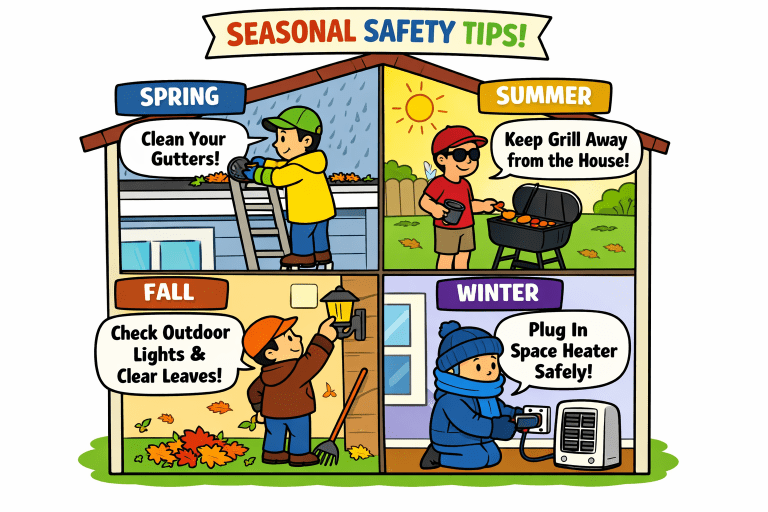
Spring is an opportune time to conduct essential cleaning and maintenance tasks to enhance home safety after winter. Key tasks include inspecting and cleaning gutters to prevent water accumulation and leaks caused by melting snow and rain. It’s also important to test smoke and carbon monoxide detectors by replacing batteries and conducting function tests. Homeowners should prepare for severe weather by updating emergency supply kits and reviewing emergency plans, while staying informed about local weather alerts. Additionally, checking sump pump functionality can help prevent basement flooding during heavy rain, and trimming branches near power lines and roofs is crucial to avoid storm-related damage from strong winds.
Summer Safety
Summer offers opportunities for outdoor enjoyment but also requires careful safety measures around grills, pools, and air conditioning systems. To grill safely, position grills at least 10 feet from homes, trim overhanging branches, keep a fire extinguisher or water spray nearby, and never leave grills unattended. For air conditioning, clean or replace filters every one to three months to enhance efficiency and prevent overheating or fire risks; regular maintenance can prolong unit life. For pool safety, install barriers, supervise children, and keep lifesaving equipment accessible; adhere to CDC guidelines to minimize drowning risks. Additionally, watch for trip hazards on patios and walkways, and securely store pesticides and herbicides out of reach of children and pets. With vigilant safety practices, outdoor spaces can be enjoyable and secure for everyone.
Fall Safety
Preparation for autumn involves several essential home maintenance tasks to avoid future complications. First, checking heating systems, like furnaces and fireplaces, should be prioritized with scheduled inspections and chimney cleaning to remove creosote buildup, a fire hazard. Next, inspect the roof and siding for any cracked or missing shingles, sealing gaps to prevent water or pest intrusion. Additionally, testing outdoor lighting is crucial as nights become longer, enhancing safety by illuminating pathways and deterring crime. It’s also an appropriate time to check home safety devices, such as fire extinguishers, to ensure they are functional or replaced if outdated. Finally, cleaning and storing summer outdoor furniture prevents damage and eliminates potential tripping hazards as daylight decreases.
Winter Safety
Winter adds unique safety concerns, from slippery sidewalks to increased use of heating appliances. Staying prepared is crucial for both comfort and security.
- Prevent Frozen Pipes: Insulate exposed pipes, especially in attics, basements, and exterior walls. Maintain indoor temperatures above 55 degrees Fahrenheit, even if you are away from home.
- Use Space Heaters Cautiously: Keep space heaters at least three feet away from anything flammable. Only use models with automatic shutoff features and never leave them running when the room is unattended.
- Holiday Decoration Safety: Choose flame-resistant decorations and use certified lighting products. Do not overload electrical outlets or power strips, and always unplug lights before sleeping or leaving the house. The Massachusetts Department of Fire Services offers additional holiday safety guidelines.
When snow or ice is expected, stock up on supplies such as de-icer, sand, or salt, and keep shovels accessible. Promptly address icy walkways to help prevent slips and falls. If you have vents or chimneys, check that they remain clear of snowdrifts and ice to ensure your heating system functions safely and efficiently during harsh winter conditions.
General Home Safety Tips
Some home safety precautions should be integrated into your routine year-round to ensure security. Key measures include: installing and maintaining smoke alarms in every bedroom and main living area, testing them monthly, and changing batteries at least annually; securing windows and doors by checking locks and upgrading to deadbolts as necessary; keeping a list of local emergency contacts, including trusted neighbors and utility companies, in a central location; and educating all household members, especially children, about basic home safety rules and emergency procedures. Regular family safety drills enhance readiness for emergencies such as fires or severe weather. By monitoring changing weather and potential hazards, you can effectively protect your household, ensuring a safer, more resilient environment year-round.
Conclusion
Maintaining home safety year-round involves addressing seasonal risks like flooding, fires, and winter weather through inspections, repairs, and preventive measures. Consistent habits, such as maintaining smoke alarms, securing entry points, and having emergency plans, bolster safety. Vigilance and planning help homeowners protect their property and loved ones year-round.