
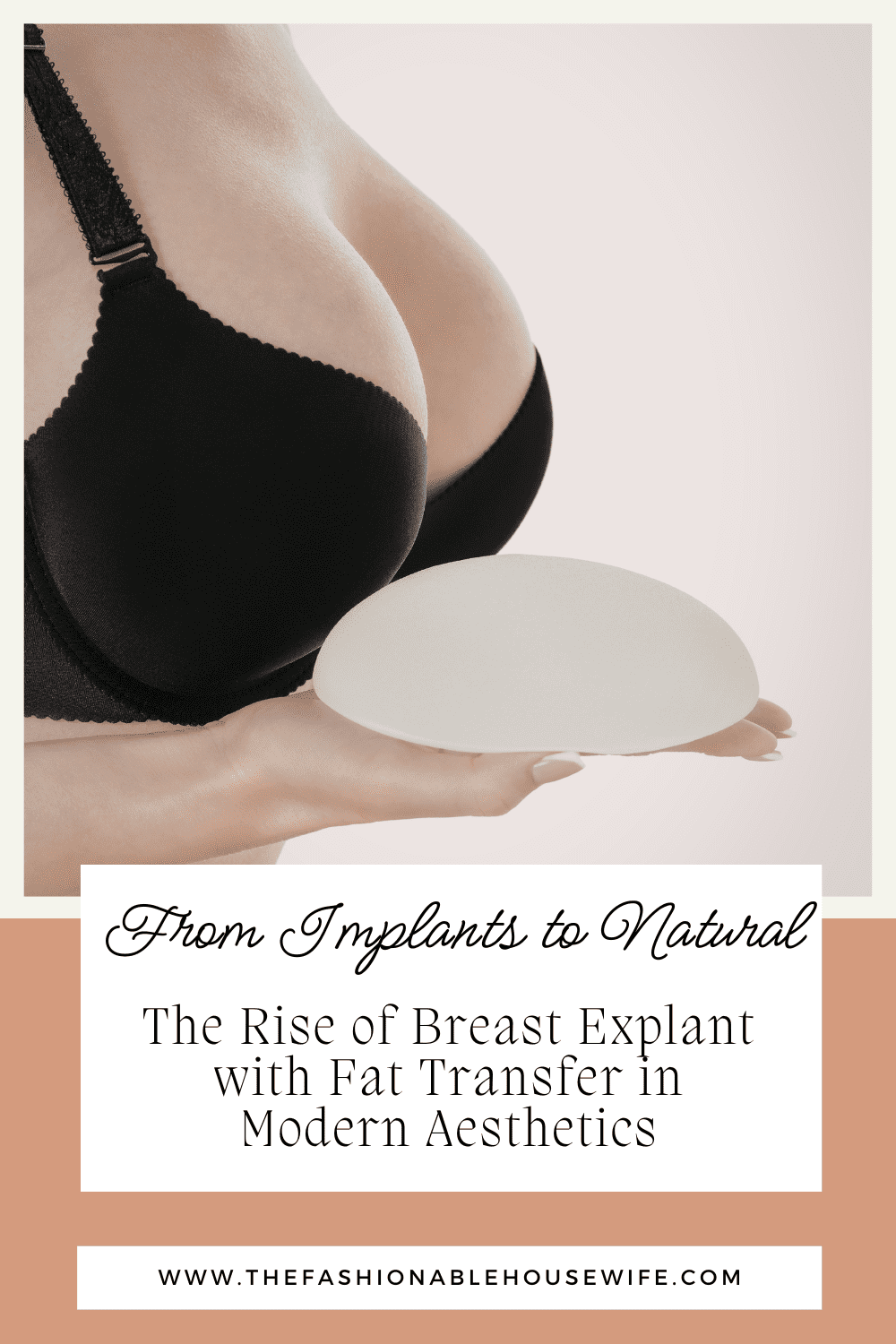
From Implants to Natural: The Rise of Breast Explant with Fat Transfer in Modern Aesthetics
The journey of breast augmentation often evolves, and for many, the desire shifts towards a more natural aesthetic. As priorities change, so do surgical advancements, leading to increasingly sophisticated options for those seeking to remove breast implants. One such compelling choice is breast explant surgery with fat transfer.
This procedure allows individuals to thoughtfully transition from implants. It restores breast volume and shape using their own body fat. This approach creates a softer, more natural breast contour. Many patients seek Natural aesthetic explant results that align with their evolving body image, often leading to enhanced comfort and satisfaction.
In this comprehensive guide, we will explore the nuances of breast explant with fat transfer. We will delve into who makes a good candidate, how the procedure is performed, what the recovery process looks like, and the remarkable “before and after” transformations patients can expect. Our aim is to provide a clear understanding of this modern approach to breast rejuvenation.
The landscape of cosmetic surgery has undergone a significant transformation in recent decades. What was once primarily focused on dramatic enhancements using synthetic materials has evolved into a nuanced field that increasingly prioritizes natural-looking results and patient well-being. This shift reflects broader cultural changes, where the emphasis has moved from an idealized, often artificial, aesthetic to one that celebrates individual beauty and health. Patients are now seeking procedures that enhance their existing features rather than fundamentally altering them, favoring outcomes that appear harmonious with their natural anatomy.
This evolution is particularly evident in breast surgery. Historically, breast augmentation almost exclusively involved implants. While still a popular and effective option for many, we have seen a growing interest in autologous tissue procedures, where a patient’s own body tissues are utilized. This movement towards self-sourced materials aligns with a desire for a more integrated and natural feel, reducing concerns about foreign bodies and promoting a sense of authenticity. The rise in patient satisfaction with these natural results speaks volumes about this paradigm shift. For those interested in seeing examples of how these procedures are transforming lives, exploring a surgeon’s Instagram feed can offer a visual journey through various patient experiences and outcomes.
Patient Safety in Cosmetic Surgery and Aesthetics
At the core of any surgical advancement is an unwavering commitment to patient safety. As procedures become more sophisticated, so too do the protocols and standards designed to protect patients. Choosing a board-certified plastic surgeon is paramount, as this certification signifies a rigorous level of training, expertise, and adherence to ethical practices. These surgeons are not only skilled in the latest techniques but are also committed to continuous education and maintaining the highest standards of care.
Beyond individual surgeon qualifications, the accreditation of surgical facilities plays a crucial role. Operating in accredited surgical centers ensures that the environment meets stringent safety standards, including sterile conditions, advanced equipment, and trained support staff. For complex procedures like breast explantation, techniques such as the en bloc capsulectomy are often preferred. This method involves removing the breast implant and its surrounding scar capsule in one piece, which is believed to reduce the risk of residual capsule tissue and potential complications. Visual documentation of such procedures, like those found in an En Bloc Gallery, can provide valuable insight into the meticulous nature of modern surgical practices. Staying informed about a surgeon’s practice and patient testimonials, often shared on platforms like Facebook, can further help patients make confident choices regarding their care.
Future Trends in Cosmetic Surgery and Aesthetics
The future of cosmetic surgery promises even more personalized and refined approaches. We anticipate continued innovation in hybrid procedures, which combine different techniques to achieve optimal results. For instance, combining explant surgery with fat transfer and a breast lift is becoming increasingly common, allowing for comprehensive rejuvenation. Regenerative medicine, utilizing a patient’s own cells to promote healing and tissue regeneration, is also an exciting frontier, potentially leading to even more natural and long-lasting outcomes.
Minimally invasive techniques will continue to evolve, aiming to reduce downtime, scarring, and discomfort while maintaining efficacy. The emphasis will remain on achieving significant improvements with the least possible intervention. We often encourage prospective patients to review extensive visual resources, such as a Breast Implant Removal Patient Gallery, to understand the breadth of possibilities and set realistic expectations. These galleries, alongside educational content often found on platforms like Youtube, serve as invaluable tools for patients to visualize their potential journey and the transformative power of modern aesthetic procedures.
Breast Explant with Fat Transfer: A Natural Alternative
For many individuals, the decision to remove breast implants marks a pivotal moment in their aesthetic journey. Whether driven by health concerns, a desire for a more natural appearance, or simply a change in lifestyle, breast explant surgery has seen a significant increase in popularity. In fact, explant surgeries increased by 13.4% in the US and 41.1% in Canada in a single year (2015-2016), highlighting a growing trend away from synthetic implants.
Breast explant surgery with fat transfer offers a compelling solution for those seeking to restore breast volume and shape using their body’s own resources. This procedure combines the removal of existing breast implants, often addressing issues like capsular contracture (the hardening of scar tissue around the implant), implant rupture, or concerns related to Breast Implant Illness (BII) symptoms, with the strategic re-introduction of autologous fat. The goal is to achieve a soft, natural breast contour that feels entirely their own.
The key benefit of this combined approach is its ability to create a more natural look and feel compared to synthetic implants. Patients often report improved comfort and satisfaction, as their breasts are reshaped with living tissue that integrates seamlessly with their body. A typical fat transfer to the breast after explant may involve transferring 200-450ml of fat per breast, depending on patient anatomy and goals, allowing for subtle yet impactful volume restoration. This method not only avoids the need for new implants but also offers the added advantage of body contouring at the donor sites where the fat is harvested. For a comprehensive understanding of the explant process, including reasons for removal and what to expect, exploring resources on Breast Implant Removal can be highly beneficial. Additionally, detailed information on the combined procedure can be found on specialized pages like Breast Implant Removal with Fat Transfer, providing further insights into this transformative option.
Clinical Considerations for Fat Grafting and Explantation
The technical execution of breast explant with fat transfer is a sophisticated process that demands precision and expertise. The procedure typically begins with the careful removal of the existing breast implants. Depending on the patient’s condition and the surgeon’s assessment, this may involve a total capsulectomy, where the entire scar capsule surrounding the implant is removed, or an en bloc capsulectomy, where the implant and capsule are removed together as one unit. The latter is often preferred, particularly if there are concerns about implant rupture or BIA-ALCL (Breast Implant-Associated Anaplastic Large Cell Lymphoma).
Following implant removal, the focus shifts to fat harvesting. This involves performing liposuction on areas of the patient’s body with excess fat, commonly the abdomen, flanks, or thighs. The harvested fat is then meticulously processed to purify it, separating healthy fat cells from oils, fluids, and blood. This purified fat is then strategically injected into the breast tissue using fine cannulas. The goal is to restore volume, improve contour, and enhance the natural shape of the breast. The success of fat grafting relies on the survival of these transferred fat cells, which integrate into the existing breast tissue. For a deeper dive into how fat is utilized for breast augmentation, including its benefits and techniques, resources like Fat Transfer Breast Augmentation offer valuable information. Witnessing the transformations through visual aids on pages such as Before and After Breast Augmentation with Fat Transfer can also help patients visualize potential outcomes.
Candidacy and Procedural Techniques
Determining who is a good candidate for breast explant with fat transfer involves a thorough evaluation of several factors. Ideal candidates are generally in good overall health, non-smokers, and have realistic expectations about the outcomes. A crucial aspect is the availability of sufficient donor fat. While it might seem challenging for slimmer individuals, nearly all patients will have sufficient fat available for a fat transfer procedure, even those who are slim, due to advanced fat harvesting techniques. Surgeons employ a “skimming technique” to gently collect fat from various areas, ensuring enough viable tissue for transfer without creating noticeable contour irregularities at the donor sites.
In some cases, especially when significant skin laxity is present after implant removal, a breast lift (mastopexy) may be performed concurrently with the explant and fat transfer. This combined approach allows for not only volume restoration but also the reshaping and repositioning of the breast mound and nipple-areola complex, leading to a more youthful and aesthetically pleasing result. The decision to include a breast lift is highly individualized and discussed during the consultation process. Understanding the potential results and aesthetic improvements can be further explored by reviewing a surgeon’s Fat Transfer Breast Augmentation Results gallery. Patients also often inquire about the visibility of scars, and information regarding Fat Transfer Breast Augmentation Scars can provide reassurance and details on scar management.
The recovery process after breast explant with fat transfer is a critical phase that influences the final outcome. Patients can generally expect some swelling, bruising, and discomfort in both the breast and donor areas. Pain medication will be prescribed to manage any discomfort. Surgical drains are often placed temporarily in the breast area to prevent fluid accumulation (seroma) and promote proper tissue adherence, typically removed within a few days.
Most patients can return to work within 5 days after breast explant with fat transfer, particularly if their job is sedentary. However, strenuous activities, heavy lifting, and intense exercise should be postponed for 2-3 weeks to allow the body to heal and the transferred fat to establish a blood supply. Travel, especially air travel, requires careful consideration. While many patients can fly home within 2-3 days, follow strict DVT (deep vein thrombosis) prophylaxis protocols, including hydration, compression socks, and frequent movement to minimize risks.
The long-term success of fat transfer hinges on the survival of the grafted fat cells. While some initial reabsorption is normal, the fat that establishes a blood supply becomes a permanent part of the breast tissue. The survival of transferred fat is somewhat limited and unpredictable, often requiring more than one procedure to achieve the desired result, especially if a significant volume increase is sought. Final results typically stabilize around six months post-operation, at which point the true volume and contour can be assessed. For more detailed information on the durability of results, resources like Does Fat Transfer Breast Augmentation Last? provide valuable insights. Additionally, seeing how results evolve over time, as depicted in “before and after” galleries that show Breast Fat Transfer 1 Year Later, can help manage expectations.
Here’s a general timeline for recovery milestones:
- Days 1-3: Rest and hydration are paramount. Assistance at home is typically required for daily tasks. Keep incisions clean and dry.
- Day 5: Many patients can return to sedentary work, avoiding any strenuous activity. Drains, if present, may be removed.
- Weeks 2-3: Light walking and low-impact activities can be gradually introduced. Avoid lifting anything heavier than a gallon of milk.
- Month 3: With surgeon’s clearance, patients can typically resume full strenuous workouts and more vigorous activities. Swelling should have significantly subsided.
Frequently Asked Questions about Breast Explant with Fat Transfer
Patients considering breast explant with fat transfer often have numerous questions, and understanding the answers is key to a confident decision. We believe in empowering patients with comprehensive information, ensuring they have a clear picture of the entire process, from preparation to long-term outcomes. Reviewing visual evidence, such as a Fat Transfer Breast Augmentation Before and After RealSelf gallery, is invaluable for setting realistic expectations and understanding the diverse results possible.
What happens to the removed implants and how do before and after photos help?
After breast explant surgery, the removed implants are typically discarded according to medical waste protocols. However, some patients may request to have their implants returned to them. In such cases, the implants are thoroughly cleaned and sterilized before being given back to the patient. This is a personal choice, and patients should discuss their preference with their surgeon beforehand.
Before and after photos are an essential tool in the consultation process. They serve multiple purposes:
- Setting Realistic Expectations: By viewing a range of results from patients with similar body types and goals, you can gain a realistic understanding of what the procedure can achieve.
- Visualizing Transformations: These images provide tangible evidence of the surgeon’s skill and the potential for significant aesthetic improvement.
- Understanding Nuances: Photos can highlight how volume is restored, how breast shape is refined, and how symmetry is improved, offering insights that verbal descriptions alone cannot convey. They illustrate the journey and the natural rejuvenation achieved.
Is there enough fat for transfer in slim patients and are multiple sessions needed?
A common concern, especially for individuals with a leaner physique, is whether they have sufficient donor fat for the transfer. The good news is that advanced fat harvesting techniques, such as the “skimming technique,” allow surgeons to collect adequate amounts of fat even from slim patients. Fat can be gently harvested from various discreet areas, including the inner thighs, outer thighs, flanks, and abdomen, without creating noticeable depressions or irregularities. Nearly all patients will have sufficient fat available for a fat transfer procedure, even those who are slim.
Regarding multiple sessions, the survival of transferred fat is somewhat limited and unpredictable. While a single session can achieve noticeable results, it is not uncommon for patients to require more than one procedure to achieve their desired cup size or volume. This staged approach allows the surgeon to gradually build up volume, ensuring the best possible fat graft survival and a natural contour. Each session typically aims to transfer 200-450ml of fat per breast.
What should I consider when choosing a surgeon in Newport Beach, CA?
Choosing the right surgeon is arguably the most crucial decision in your breast explant with fat transfer journey. When seeking a surgeon in Newport Beach, CA, or any location, several factors should guide your choice:
- Board Certification: Ensure your surgeon is board-certified by the American Board of Plastic Surgery. This signifies extensive training, rigorous examination, and a commitment to patient safety and ethical practices.
- Experience with Explant and Fat Transfer: Look for a surgeon with specific expertise and a proven track record in both breast explantation (especially en bloc capsulectomy) and autologous fat grafting to the breasts.
- Before and After Portfolio: A comprehensive gallery of their own patient results is invaluable. Pay attention to cases similar to yours and assess the naturalness and consistency of their outcomes.
- Patient Reviews and Testimonials: Online reviews and direct testimonials can offer insights into the patient experience, the surgeon’s bedside manner, and the overall quality of care.
- Facility Accreditation: Confirm that the surgical facility where the procedure will be performed is accredited, ensuring the highest standards of safety and care.
- Personal Connection: A good surgeon-patient relationship is built on trust and clear communication. Choose a surgeon with whom you feel comfortable, who listens to your concerns, and who clearly explains the procedure, risks, and expected outcomes.
Conclusion
The journey of breast explant with fat transfer represents a significant advancement in aesthetic and reconstructive procedures, offering a path to natural rejuvenation and enhanced well-being. This innovative approach allows individuals to move away from implants, utilizing their body’s own resources to create a softer, more authentic breast contour. We have explored the evolution of cosmetic surgery, the meticulous clinical considerations involved, the recovery process, and the realistic long-term outcomes patients can expect.
By combining the safe removal of breast implants with the artistry of fat grafting, surgeons can achieve results that not only restore volume and shape but also align with a patient’s desire for a more natural look and feel. This patient-centered care, driven by surgical innovation, continues to redefine what is possible in breast aesthetics. For those considering this transformative procedure, we encourage thorough research and consultation with a board-certified plastic surgeon. To learn more about breast implant removal options and explore how this procedure might align with your personal goals, we invite you to visit our dedicated resource page on Newport Beach Breast Implant Removal. Understanding the details and seeing real patient journeys is key to making an informed decision. The commitment to providing comprehensive information and transparent insights, often reflected in a practice’s online presence, including their Plastic Surgery Website Design, underscores a dedication to patient education and support.