Emerging Trends in Commercial Construction in Raleigh, NC: Shaping the Future of the Triangle
Table of Contents
- Sustainable Building Practices
- Technological Integration
- Modular and Prefabricated Construction
- Adaptive Reuse of Existing Structures
- Labor Market Challenges
- Economic Factors Influencing Construction
- Focus on Human-Centered Design
- Conclusion
The landscape of commercial construction in Raleigh, NC, is undergoing a profound transformation. As one of the fastest-growing cities in the Southeast, Raleigh is setting new benchmarks for innovative building practices, with developers, investors, and contractors alike seeking cutting-edge solutions to meet escalating market needs. Staying attuned to these shifts is essential for any local stakeholder aiming to thrive in the dynamic environment that defines the Triangle. As you explore the latest trends, consider partnering with trusted industry professionals such as Blue Chip Window & Door to achieve your project vision.
With the region’s commitment to sustainability and technology, local projects are serving as models for commercial development nationwide. Fueled by both the technology boom and a wave of new residents, Raleigh continues to see a surge in demand for versatile, environmentally friendly, and human-centered commercial spaces. Whether through smart technology or eco-conscious building standards, today’s construction professionals are rethinking how commercial spaces function in the heart of North Carolina. Heightened attention to energy costs, the rapid digital transformation of workspaces, and the replenishing of older building stock have pushed Raleigh’s construction sector towards innovation. Regional employers, especially tech and life science companies, expect facilities that promote well-being, flexibility, and resilience. This expectation, combined with unique labor and economic challenges, provides fertile ground for trailblazing strategies in the city’s construction sector. This article explores key trends defining commercial construction in Raleigh, NC, and offers guidance on what to expect as the region continues to grow and evolve.
Sustainable Building Practices
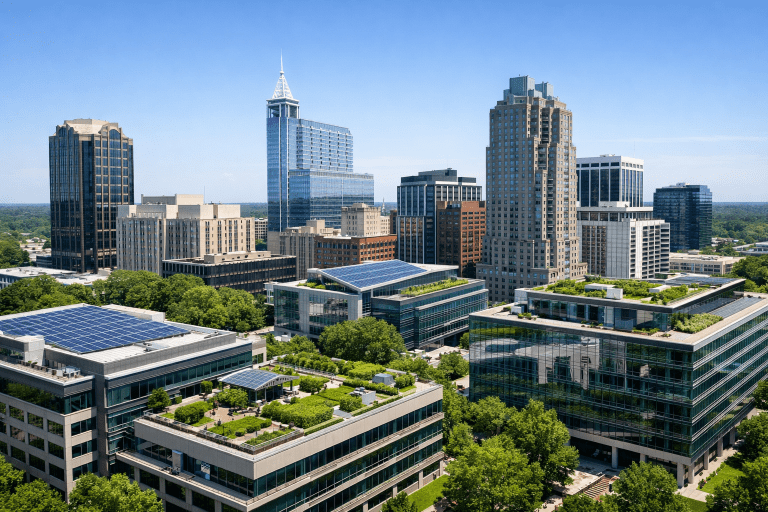
Sustainability is taking center stage in Raleigh’s commercial construction projects. Developers prioritize LEED and WELL certifications, enhanced energy efficiency, and eco-friendly materials. In the Triangle, new office complexes increasingly harness renewable power, low-impact landscaping, and insulated glass, measures that support ultralow energy consumption and foster healthier indoor environments. These green initiatives resonate strongly with Raleigh’s business community and align with the city’s broader vision for growth that balances progress with preservation.
Technological Integration
With the tech sector booming in Raleigh, commercial buildings are rapidly becoming smarter and more connected. Businesses seek office spaces equipped with next-generation features like IoT monitoring, advanced security, 5G connectivity, and algorithm-driven energy management. These innovations translate to greater building efficiency and tenant satisfaction, while also helping construction teams streamline project schedules and optimize resource use. In a region known for its research and tech innovation, such advancements are not just trends, as they are quickly becoming standard practice.
Modular and Prefabricated Construction
The shift towards modular and prefabricated construction is accelerating in Raleigh, where speed to market and consistency are key. Prefabrication allows key building components to be manufactured off-site and assembled quickly, with minimal disruption to surrounding neighborhoods. This approach is increasingly popular among healthcare providers, hotels, and local educational institutions seeking to expand capacity amid labor shortages and supply chain obstacles. Some facilities can complete major projects in weeks that once took months, keeping Raleigh competitive as a business destination.
Adaptive Reuse of Existing Structures
As developable land grows scarce and urban vibrancy becomes a key asset, Raleigh is embracing adaptive reuse to breathe new life into underutilized or historic buildings creatively. Rather than demolish, construction professionals are converting former textile mills, factories, and warehouses into vibrant offices, coworking hubs, and innovation labs. These projects blend the city’s rich heritage with modern functionality, driving savings in time, costs, and carbon output while enhancing neighborhood character.
Labor Market Challenges
Raleigh’s boom is not without challenges as labor markets tighten. The construction workforce is aging, and recruitment of the next generation of skilled tradespeople lags behind demand. Local companies are responding with workforce training, partnerships with Wake Tech, and investments in safer, more efficient job sites. Some firms also explore automation and robotics to offset worker shortages while maintaining craftsmanship and accelerating project delivery.
Economic Factors Influencing Construction
Fluctuations in material pricing, interest rates, and supply chain reliability all influence the cost and pace of construction throughout Raleigh. While the outlook remains positive for Triangle commercial development, persistent cost pressures challenge even established builders. National construction forecasts, such as the Dodge Construction Outlook, forecast continued growth but warn of headwinds. Local developers are adapting with flexible project plans and creative financing to keep pace with Raleigh’s rapid evolution.
Focus on Human-Centered Design
The post-pandemic era has shifted priorities toward human-centered design throughout Raleigh’s commercial spaces. Office layouts now emphasize flexible work zones, superior indoor air quality, ample daylighting, and on-site wellness amenities. Employers are seeking environments that foster health and engagement alongside productivity, an approach resonant with the talent-driven culture of the Triangle’s workforce. Research consistently links these features to greater employee satisfaction, retention, and brand appeal as Raleigh continues to draw top companies and talent.
Conclusion
Raleigh, NC, is a living blueprint for commercial construction’s next chapter. The city’s leaders and builders are leveraging sustainability, technology, and adaptability to deliver projects that meet modern expectations without sacrificing what makes Raleigh unique. By paying close attention to these trends, Raleigh’s construction community will continue to create commercial environments that reflect both the character and the limitless potential of the Triangle.