

Bed Bug Prevention for Travelers and Vacation Rentals in Wilmington and Brunswick County, North Carolina

Table of Contents
- Why Bed Bug Prevention Matters
- How Bed Bugs Spread During Travel
- How to Check a Hotel or Rental Room
- How to Protect Luggage and Clothing
- What to Do After Returning Home
- Prevention Tips for Vacation Rental Hosts
- Common Prevention Mistakes
- When to Seek Professional Help
- Frequently Asked Questions
- Conclusion
Whether you are staying near Wilmington’s riverfront, visiting Carolina Beach, or managing a vacation home in Brunswick County, bed bug prevention starts with practical habits, not panic. Travelers who notice possible signs after a trip can take prompt, informed steps, including exploring options for bed bug treatment in Wilmington when an inspection is warranted.
Bed bugs can turn up in clean or cluttered spaces alike because they are hitchhikers. They may hide in seams, folds, cracks, luggage, clothing, upholstered furniture, and other personal belongings. Careful checking before unpacking, along with a consistent routine when returning home, can help reduce the chance of moving them from a guest room into a home or rental property.
Why Bed Bug Prevention Matters
Bed bugs are a public health pest, although they are not known to transmit disease. Their bites can cause itching or skin irritation in some people, and the uncertainty of a suspected infestation can be stressful. The Environmental Protection Agency’s bed bug prevention, detection, and control guidance emphasizes prevention, identification, and careful control rather than relying on assumptions.
For coastal North Carolina households and short-term rentals, early action matters because guests, luggage, laundry, and furnishings may move frequently between rooms and properties. Finding a concern early can help limit the number of items that need to be inspected, cleaned, isolated, or treated.
If you find a live insect, repeated dark spotting, shed skins, or other credible signs, avoid moving belongings to another room. Instead, document what you found and consider contacting bed bug exterminators near you for help identifying the issue and planning the next step.
How Bed Bugs Spread During Travel
Bed bugs do not jump or fly. Instead, they often spread by hiding in items that people carry or move. A bug can conceal itself in a suitcase seam, backpack pocket, folded jacket, or upholstered chair and then be transported to a different building, vehicle, or home.
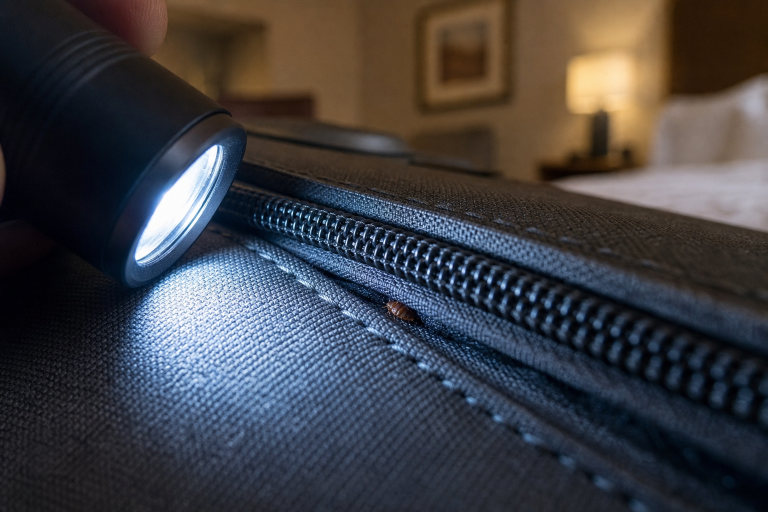
Common Ways Bed Bugs Hitchhike
- Luggage is placed directly on beds, carpets, or upholstered seating.
- Used furniture, mattresses, clothing, and boxed items were brought indoors without inspection.
- Purses, laptop bags, gym bags, backpacks, and coats left in infested areas.
- Personal belongings moved between guest rooms, vehicles, storage spaces, and homes.
- Laundry or soft items that are carried from one potentially affected location to another.
How to Check a Hotel or Rental Room
Before unpacking at a Wilmington hotel, beach condo, or Brunswick County vacation rental, complete a brief visual check. Use a phone flashlight or a small flashlight to make seams and narrow gaps easier to inspect. A clean-looking room is encouraging, but appearance alone cannot confirm that bed bugs are absent.
- Keep luggage on a hard surface, such as a bathroom counter, until the check is complete.
- Inspect mattress seams, corners, piping, and the area around the box spring.
- Look behind and around the headboard if it can be done safely without damaging anything.
- Check nearby upholstered chairs, luggage racks, drawers, nightstands, and baseboards.
- Watch for live bugs, shed skins, pale eggs, dark spots, or small blood marks.
- Report clear signs to the host, front desk, or property manager before settling in.
How to Protect Luggage and Clothing
Simple packing choices create useful separation between your belongings and surfaces in an unfamiliar room. Keep suitcases closed when they are not in use, place them on an inspected rack or hard, elevated surface, and avoid setting bags on beds, sofas, or fabric chairs.
Smart Packing Habits
- Use packing cubes or sealable bags to organize clothing.
- Keep clean clothing separate from worn clothing throughout the trip.
- Inspect suitcase seams, zippers, pockets, handles, and wheels before departure.
- Keep jackets, purses, and backpacks off upholstered furniture when possible.
- Carry a small flashlight for quick room and luggage checks.
The University of Georgia offers a useful visual routine for checking for bed bugs after checking in, including where to place luggage and which areas deserve attention first.
What to Do After Returning Home
When you arrive home, keep potentially exposed items away from bedrooms, closets, and upholstered furniture until you have handled them. A garage, laundry area, bathroom, porch, or other hard-surface location can provide a more controlled place to unpack when available.
- Take washable travel clothing directly to the washer or dryer.
- Dry items using the highest heat setting that is safe for the fabric, following the care label.
- Inspect luggage seams, pockets, liners, and wheels before storage.
- Vacuum the luggage carefully if appropriate, then empty the vacuum contents outdoors.
- Keep items that cannot yet be washed or inspected sealed and separate from other belongings.
Prevention Tips for Vacation Rental Hosts
Vacation rental owners and managers in Wilmington and Brunswick County benefit from a repeatable turnover process. Regular visual checks help housekeeping teams recognize concerns early and create a consistent response for guest reports.
Recommended Turnover Checklist
- Inspect mattress seams, box springs, headboards, bed frames, and upholstered furniture.
- Check behind nightstands and along baseboards near sleeping areas.
- Train staff to report live insects, dark spotting, shed skins, and guest concerns promptly.
- Document possible evidence with photos, dates, room details, and written notes.
- Respond respectfully to guest reports without assigning blame.
- Limit access to a room with credible signs until it can be evaluated.
- Keep inspection and treatment records for future reference.
Common Prevention Mistakes
- Putting a suitcase on the bed before inspecting the room.
- Assuming a tidy room cannot have bed bugs.
- Using bites alone as proof of an infestation.
- Moving suspect furniture, linens, or bags into another room.
- Discarding belongings before obtaining reliable identification advice.
- Applying excessive pesticide or household chemicals without following the product label.
- Waiting after finding a confirmed bed bug rather than taking measured action.
When to Seek Professional Help
A professional inspection is especially sensible when you find a live bed bug, see recurring signs, notice evidence in more than one room, or manage a rental property with frequent guest turnover. Before the visit, avoid relocating items, save a sample in a sealed container if you can do so safely, and write down where and when each sign appeared. Mention recent travel, used furniture, and activity in nearby units so the inspection can focus on relevant areas.
Frequently Asked Questions
Can bed bugs travel on clothing?
They can hide in clothing folds, seams, pockets, and laundry piles. Separating worn clothing and laundering or drying appropriate items after travel can reduce opportunities for hitchhiking bugs to enter living spaces.
Should luggage go on a hotel bed?
No. Use an inspected luggage rack or a hard, elevated surface away from the bed whenever possible.
Are bed bug bites enough to confirm an infestation?
No. Skin reactions can resemble other insect bites or skin conditions. Physical evidence and reliable identification are more dependable than bite patterns alone.
Can bed bugs live in a car?
They may be carried into a vehicle inside luggage, blankets, clothing, or other soft items. Inspect and handle potentially exposed belongings before storing them in the car or bringing them indoors.
What should a vacation rental host do after a guest report?
Take the report seriously, document the concern, limit unnecessary access to the area, inspect for physical signs, and arrange qualified assistance when evidence supports further action.
Conclusion
Bed bug prevention does not require complicated equipment. A short room inspection, careful luggage placement, organized packing, prompt laundry, and respectful reporting can make travel and vacation rental turnover more manageable throughout Wilmington and Brunswick County.