
Comprehensive Guide to Choosing Industrial Piping Materials and Components
Table of Contents
- Understanding Piping Materials
- Factors Influencing Material Selection
- Common Industrial Piping Materials
- Importance of Component Selection
- Standards and Regulations
- Maintenance and Lifecycle Considerations
- Emerging Trends in Piping Materials
- Conclusion
Choosing the right materials and components for industrial piping systems is fundamental to ensuring the safety, efficiency, and longevity of these critical infrastructures. Every decision, from pipe composition to joining method, can impact the operational reliability of the entire system. Whether you are sourcing pipes or specialized fittings, companies like Cruco Mill & Industrial Supply offer a broad range of solutions tailored to various industrial needs.
Piping systems must withstand unique pressures, temperatures, and chemical exposures depending on their use. Careful selection of each material not only addresses immediate function but also the system’s long-term durability and cost efficiency. This guide explores the types of piping materials, essential selection factors, compliance considerations, and emerging trends to support robust industrial design.
Understanding Piping Materials
Each piping material must be able to handle specific operational stresses, such as fluctuating pressures, wide temperature ranges, and exposure to potentially reactive chemicals. Choosing the right material helps prevent leaks, corrosion, and premature failures, ensuring the system operates at maximum efficiency and with minimal risk.
Industrial designers and engineers must assess the environment and process specifications before making their recommendations. Material suitability ultimately links directly to performance and safety.
Factors Influencing Material Selection
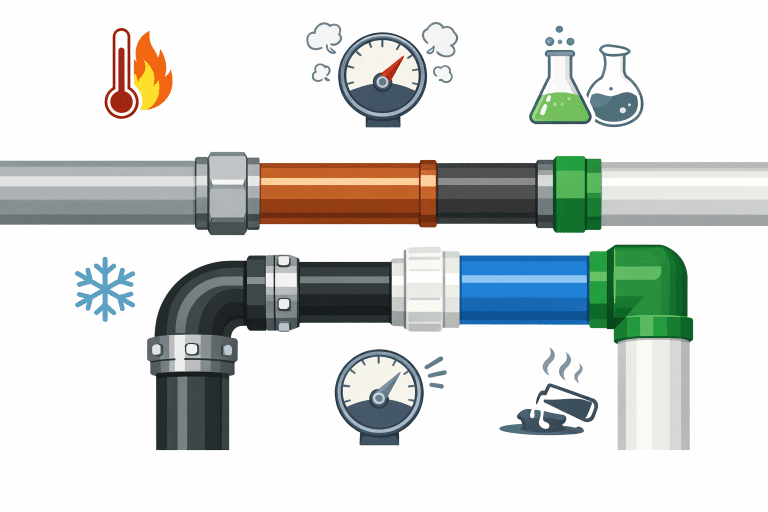
A variety of considerations dictate the best choice for piping systems in any industrial context:
- Corrosion Resistance: Critical for transporting corrosive fluids or operating in harsh environments. Selecting a resistant material helps prevent gradual material degradation, which can lead to leaks or catastrophic failures.
- Temperature and Pressure Ratings: Materials must support the highest and lowest expected process conditions. Failing to consider these parameters may lead to material fatigue or deformation.
- Cost: While budget constraints matter, it is vital to balance lower initial costs against potential long-term maintenance or replacement expenses.
- Installation and Maintenance: Materials that are easy to install or require less frequent maintenance can deliver significant long-term savings and reduced system downtime.
Common Industrial Piping Materials
Industrial piping systems use a range of materials. The main options include metals and plastics, each with distinctive benefits and limitations. The Engineering Toolbox provides an in-depth comparison of different piping materials, covering mechanical properties, chemical resistance, and suitability for special applications.
Metals
- Carbon Steel: Widely used for its strength and affordability, carbon steel is suitable for applications involving high pressure. It can, however, be susceptible to corrosion in some environments and requires protective coatings or regular maintenance.
- Stainless Steel: Known for excellent corrosion resistance and high strength, stainless steel is ideal for food processing, pharmaceutical, and high-temperature applications.
- Copper-Nickel Alloys: These alloys are especially suitable for marine and offshore industries due to their superior resistance to biofouling and corrosion. Slip-on flange connectors made from CuNi 90/10 alloy are a preferred solution for corrosive piping systems where durability is paramount.
Plastics
- Polyvinyl Chloride (PVC): Lightweight, cost-effective, and easy to install, PVC is a go-to option for non-pressurized and low-temperature applications.
- Chlorinated Polyvinyl Chloride (CPVC): Superior to PVC in terms of chemical resistance and temperature tolerance, CPVC is well-suited for industrial applications that require both affordability and reliability.
- Polyamide-12 (PA12): A high-performance engineering plastic, PA12 offers outstanding resistance to impact, chemicals, and abrasion. It is increasingly used in pressurized systems, particularly in the energy sector, crude oil and gas gathering networks.
Importance of Component Selection
Piping systems require more than just pipes. Valves, flanges, and fittings play central roles in the safe operation and maintenance of the network. Selecting the right components involves careful consideration of compatibility with the pipe materials and the system’s operational conditions. For example, slip-on flange connectors manufactured from CuNi 90/10 alloy offer robust performance in corrosive environments and are indispensable in demanding industrial settings.
Standards and Regulations
Adhering to recognized industry standards is vital to ensure both safety and regulatory compliance. The American Society of Mechanical Engineers (ASME), for instance, provides standards such as ASME NM.1 that streamline the implementation of thermoplastic piping systems. Staying up to date on these regulations can reduce liability and ensure longevity for new installations.
Maintenance and Lifecycle Considerations
Industrial operators must take a holistic view when assessing piping material choices, factoring in more than just initial purchase price. Lifetime cost is influenced by the following:
- Installation Costs: The price of materials and labor at setup can vary significantly depending on the system complexity and materials.
- Maintenance Requirements: Frequent or difficult maintenance can lead to higher operational costs and more downtime.
- Expected Service Life: Long-lasting materials and components reduce the need for replacements and service interruptions.
For example, CPVC piping offers a favorable combination of longevity, chemical resistance, and thermal stability, resulting in lower total lifecycle costs.
Emerging Trends in Piping Materials
Advancements in material science continually bring new options to market that improve performance, longevity, and sustainability. Polyamide-12 (PA12), in particular, is gaining traction as a robust option for pressurized transport in demanding sectors like energy and chemical processing. Its durability, flexibility, and corrosion resistance address many limitations found in legacy materials.
Conclusion
Making strategic decisions about piping materials and component selection is essential to the long-term success of industrial piping systems. A well-considered choice results in greater safety, lower maintenance, and increased cost-effectiveness. By paying close attention to material properties, regulatory standards, and emerging innovations, engineers and operators can ensure optimal performance and reliability for years to come.