

Essential Tips for Refinishing Hardwood Floors: A Complete Homeowner’s Guide
Key Takeaways
- Recognize when hardwood floors require refinishing through visible signs of wear.
- Follow a step-by-step process for preparation, sanding, staining, and finishing.
- Adopt maintenance strategies to protect your newly refinished floors.
- Avoid common mistakes to ensure enduring beauty and function.
Refinishing hardwood floors can transform the look and feel of your entire home, restoring warmth and preserving the natural beauty of your flooring for years to come. Whether your floors are showing signs of wear or simply need an updated look, the refinishing process can yield dramatic results with the right know-how and preparation. For those seeking regional expertise in floor restoration, research professionals specializing in hardwood refinishing Denver to ensure top-quality workmanship.
Understanding the refinishing process and following essential steps can save you time, money, and stress. With the methods shared in this guide, even beginner DIYers can achieve professional-looking results. Taking the time to refinish your floors not only rejuvenates your home but also increases its value and curb appeal.
Before diving into the steps of refinishing, it’s critical to recognize the signs your floors need attention and to properly prepare for lasting results. Following the advice below will empower you to tackle each phase of the project with confidence and skill.
Signs Your Hardwood Floors Need Refinishing
Hardwood floors are designed to withstand years of daily use, but even the most durable surfaces eventually exhibit telltale signs that refinishing is needed. Common indicators include:
- Scratches, dents, and gouges that mar the aesthetic and compromise wood integrity.
- Noticeable discoloration or faded spots caused by sunlight exposure.
- Presence of water stains, dark spots, or warping in planks.
- A lackluster or dull finish that persists even after cleaning.
Frequent inspection and early intervention help prevent more serious damage and costly repairs, making it easier to maintain beautiful, lasting floors.
Preparation Steps Before Refinishing
Thorough preparation lays the foundation for a successful refinishing project. Certain steps must be followed to ensure optimal results:
- Clear the Area: Remove all furniture, rugs, and personal items from the space to create a clear working area.
- Clean Thoroughly: Sweep and mop the floor to remove dust, dirt, and residue. A clean surface prevents debris from interfering with sanding and finishing.
- Repair Damages: Use wood filler to address cracks, gouges, or nail holes and allow it to dry completely before moving on.
- Ensure Ventilation: Open windows and doors to promote airflow and reduce exposure to fumes from stains and finishes.
Taking these steps helps ensure a safer, more effective, and longer-lasting refinishing job.
Sanding: The Key to a Smooth Surface
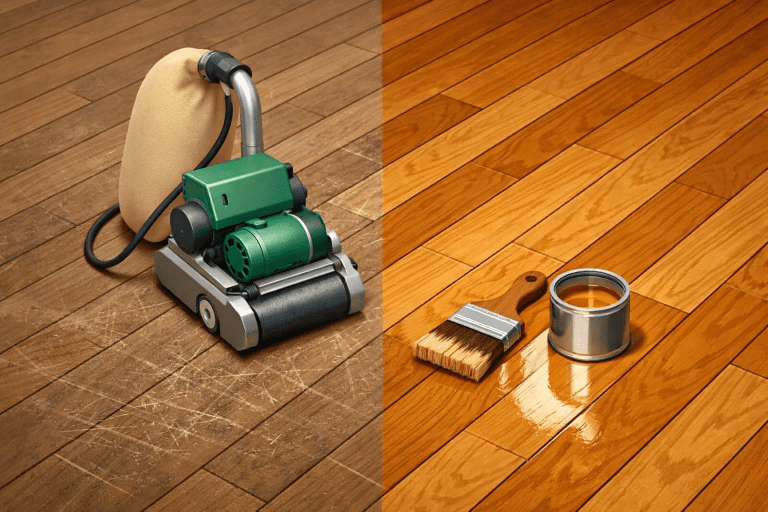
Sanding is a crucial step in refinishing, as it eliminates old finishes, corrects defects, and prepares the surface for stain and sealant. For large areas, use a drum sander; for corners and borders, an edge sander or handheld tool is recommended. Start with coarse-grit sandpaper and progress to finer grits for a smooth finish. Always sand in the direction of the wood grain to prevent scratches and splinters. After sanding, thoroughly vacuum and wipe the floor with a damp cloth to remove dust before staining.
Staining: Choosing the Right Color
Applying stain to hardwood floors significantly enhances their appearance, highlighting the wood’s unique features. Start by selecting a stain that matches your overall interior style, considering options like warm tones, deep hues, or lighter finishes. Always test the stain on a small, inconspicuous area to ensure you are satisfied with the color. When applying, use a brush or a lint-free cloth to evenly coat the wood’s grain for a natural look. It is crucial to allow the stain to dry completely, following the manufacturer’s drying time recommendations, before proceeding to the finishing process. Taking care in the selection and application of the stain will help achieve the desired final result.
Finishing: Protecting Your Floors
The finishing stage is crucial for locking in the stain and protecting the floor from wear, moisture, and daily use. You can choose between water-based and oil-based polyurethane finishes: water-based dries faster and retains a lighter hue, while oil-based options offer greater durability and a warmer appearance. It is recommended to apply several thin coats instead of one thick coat, allowing each to dry completely to create protective layers. Light sanding with fine-grit sandpaper between coats helps achieve a smooth, bubble-free, and flawless surface. Careful finishing enhances both the durability and aesthetic appeal of newly restored flooring.
Maintenance Tips for Longevity
Preserving the appearance and functionality of your refinished hardwood requires consistent, gentle care:
- Place felt pads under furniture legs to prevent gouges and scrapes during movement.
- Use rugs or runners in high-traffic areas to minimize abrasion and surface wear.
- Address spills right away to avoid moisture penetration or staining.
- Sweep regularly and damp mop using cleaning products formulated for hardwood floors; never soak the wood with water.
By following these simple rules, you can enjoy glossy, resilient hardwood floors for many years to come.
Common Mistakes to Avoid
Refinishing hardwood floors involves several detailed steps, and avoiding errors is vital for both appearance and longevity. Some frequent missteps include:
- Skipping grits on the sandpaper leaves marks and an uneven surface.
- Applying stain or topcoat to floors that are not spotless results in patchy finishes or peeling.
- Impatience with drying times can lead to sticky surfaces or a lackluster result.
- Combining incompatible stain and finish products can potentially cause peeling or bubbling.
Mindfulness and attention to detail at each stage of the project are crucial to attaining professional-looking, lasting results.
Conclusion
Refinishing hardwood floors is an effective way to revitalize your home’s style and preserve one of its most valuable features. By following the tips and strategies outlined above, homeowners can approach refinishing projects with confidence and avoid common pitfalls for successful, beautiful results. Proper care and maintenance will keep your investment shining for years, offering comfort and lasting value.