
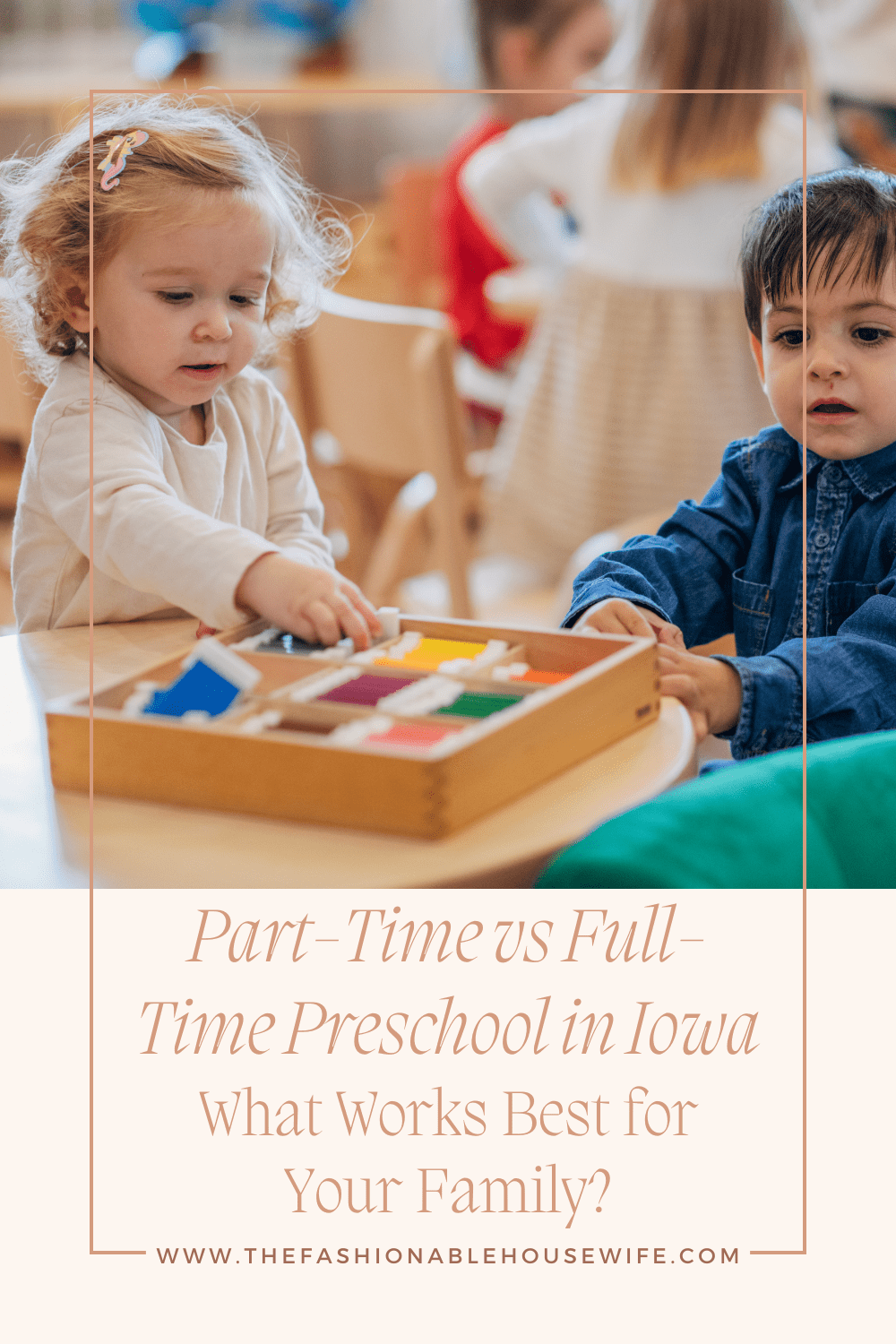
Part-Time vs Full-Time Preschool in Iowa: What Works Best for Your Family?
Early Childhood Education in Iowa is no longer just “babysitting,” but a critical pillar for families’ and the state’s economic and social stability. Decisions around this increasingly sit at the intersection of career architecture, household rhythm, and long-term developmental planning. Families are no longer simply choosing schedules, they’re designing systems that must flex with work demands while still supporting consistent childhood growth for their preschooler. It’s less about convenience now, and more about alignment between time, structure, and progress.
1. The Scheduling Flexibility Factor: When Work-Life Reality Shapes Early Learning
The part-time vs full-time decision is rarely academic, it’s operational. Families are essentially balancing two parallel systems: professional responsibility and a child’s developmental consistency. In practice, neither side can be ignored.
What tends to matter most in real scenarios:
Ø Full-time programs offer stability in routine, reducing daily transition stress
Ø Part-time setups create breathing room for family-led interaction and flexibility
Ø Hybrid arrangements often emerge as a strategic middle ground for shifting schedules
From a planning perspective, professionals often frame it as continuity vs elasticity. Full-time supports predictability and structured progression, while part-time allows more direct parental presence during formative years. The strongest decisions come when families stop asking “what is better?” and start asking “which Preschool in Des Moines is offering a sustainable program for our current life cycle?”
2. The Social Quotient: Why Even Limited Exposure Changes Development
People often underestimate what even a couple of days in a structured preschool environment can do. It doesn’t look dramatic from the outside—but internally, children start rewiring how they relate to people.
Within group learning settings, children naturally begin to:
Ø They pause before reacting, because they’ve learned to read a room
Ø They start waiting, not because they’re told to—but because group rhythm teaches it
Ø They begin using words not just to speak, but to connect
Ø Build early confidence in speaking within peer groups
In structured preschool environments, these interactions are not incidental—they are designed through play, guided conversation, and routine-based group activities. The result is a subtle but powerful shift in “social quotient,” where children begin to understand not just what to say, but when and how to say it. Even limited participation can act as a developmental accelerator, especially when paired with consistent home reinforcement and emotionally aware caregiving.
3. After-Hours Support: Designing Around Real Work Demands
Modern family structures don’t always align with traditional schedules. Extended care options have therefore become less of an add-on and more of an operational necessity for many households.
Effective after-hours systems typically include:
Ø Structured extended supervision with consistent caregiver rotation
Ø Calm transition periods rather than abrupt schedule extensions
Ø Clear communication protocols for late pickups or flexible timing
For working parents in demanding roles, this isn’t just convenience—it’s infrastructure support. The key evaluation point isn’t simply availability, but stability during extended hours. Quality programs maintain emotional consistency even when the clock extends beyond standard learning time, ensuring children don’t experience after-hours care as a separate or disconnected environment.
4. Parent Involvement: Staying Present without Disrupting the System
Strong early education models don’t separate parents from learning—they integrate them strategically. The most effective systems treat parental involvement as structured collaboration, not occasional participation.
Common high-value engagement points include:
Ø Scheduled parent-teacher conferences focused on developmental tracking
Ø Volunteer opportunities that allow observation without disruption
Ø Digital or direct updates that reflect real progress, not just summaries
The key is balance. Too little involvement creates distance; too much can interrupt classroom rhythm.
The most effective approach is consistent but measured engagement—enough to stay informed, but structured enough to preserve the child’s independent learning environment. This is where communication design becomes just as important as curriculum design.
In essence, when deciding preschool timelines for your child, the “rhythm” and “intention” of the choice matters more than the clock. The choice isn’t a fixed formula, but a calibration of family rhythm, work structure, and developmental intention. As such identifying an institution that offers sustainability, not urgency is crucial. In well-aligned systems, flexibility and structure are not opposites, they are coordinated tools for long-term stability. The families who navigate it well aren’t chasing perfect systems. They’re building adaptable ones that respond to work pressure without losing sight of childhood stability.